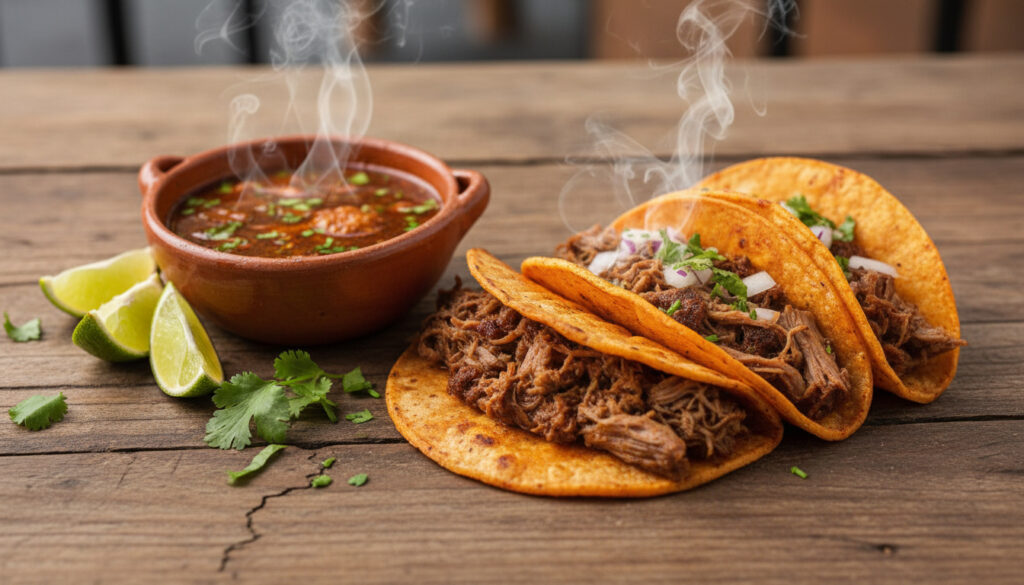
Birria Tacos Recipe – Authentic Beef with Consomé
Birria tacos have transformed from a regional Mexican stew into a global comfort food phenomenon. The dish combines slow-braised meat—traditionally goat, now commonly beef—with a rich, chile-laden consomé that serves as both cooking liquid and dipping sauce. Crisped tortillas encase tender shredded protein, creating a textural contrast that has captivated food enthusiasts across social media and restaurant menus worldwide.
The signature element separating birria tacos from standard folded tortillas lies in the assembly process. Cooks dip corn tortillas into rendered fat and reduced broth before griddling, infusing each bite with concentrated flavor. This technique, born from the traditional Birria stews of Jalisco, Mexico, produces tacos that are simultaneously crispy, juicy, and deeply aromatic.
Whether prepared as a weekend project or adapted for weeknight convenience through slow cooker methods, the recipe accommodates various kitchen setups, offering authentic techniques alongside modern adaptations to ensure tender results regardless of equipment.
How Do You Make Birria Tacos?
Understanding the foundational elements helps organize the cooking process before beginning the multi-hour preparation.
Origin
Jalisco, Mexico (traditionally goat, now beef)
Key Feature
Stew meat + consomé dip
Timing
Prep: 30 min | Cook: 3-4 hrs
Yield
8-10 tacos
- Use chuck roast for tender, shreddable beef that absorbs the chile sauce
- Toast dried chiles before blending to develop deeper, smokier flavor profiles
- Marinate meat overnight (2+ hours minimum) for maximum penetration of spices
- Quesabirria variation: Add Oaxaca or Chihuahua cheese for a melted, gooey interior
- Skim excess fat from broth to create a clear, rich consomé for dipping
- Dip tortillas in consomé fat before frying to achieve the characteristic red hue
| Main Protein | Beef chuck roast (3 lbs) or goat shoulder |
| Primary Chiles | Guajillo, ancho, chipotle in adobo |
| Tortilla Type | Corn (16-20 count) |
| Estimated Calories | ~350-600 per taco (varies by cheese/fat) |
| Difficulty Level | Intermediate |
| Cooking Temperature | 300-325°F (oven) or low simmer |
| Resting Time | 15 minutes before shredding |
Birria Tacos Cooking Methods: Slow Cooker, Oven, and More
The braising process demands low, consistent heat to break down collagen in tougher cuts. Multiple equipment options yield satisfactory results, though texture nuances vary slightly between methods.
Oven Braising
Set oven to 300-325°F. Place marinated meat and sauce in a heavy Dutch oven, covered tightly. Braise for approximately 3 hours until fork-tender. This method provides even heat distribution and allows for easy reduction of cooking liquids into consomé afterward.
Slow Cooker Adaptation
After initial preparation and optional smoking, transfer ingredients to a slow cooker. Cook on high for 3-6 hours depending on meat density. This hands-off approach benefits busy schedules, though the Maillard reaction (browning) requires pre-searing on the stovetop for optimal depth.
Stovetop Technique
Maintain medium heat in a heavy-bottomed pot, covered, for roughly 3 hours. Monitor liquid levels closely, adding beef broth or water as evaporation occurs. This traditional method offers immediate control over temperature adjustments but requires periodic attention.
Regardless of method, maintain gentle simmering rather than vigorous boiling. Rapid bubbling toughens meat fibers and clouds the consomé. Aim for occasional bubbles breaking the surface—approximately 180-190°F internal liquid temperature.
What Is Birria Consomé and Key Ingredients?
Consomé represents the clarified, concentrated broth resulting from slow-cooking meat with chiles and aromatics. This liquid serves dual purposes: braising medium and dipping sauce. The distinction between standard birria stew and taco-ready consomé involves fat separation—skimming oil from the top yields a cleaner dipping broth while reserving the seasoned fat for frying tortillas.
Essential Chiles and Aromatics
The sauce foundation relies on dried guajillo chiles (3-10 pods) and ancho chiles, rehydrated and blended with 5-7 garlic cloves, 1-3 onions, and tomatoes. Vinegar (cider or apple cider) provides acidity to balance richness. Warm spices including cinnamon, cloves, marjoram, allspice, and cumin round out the profile. Rick Bayless emphasizes the importance of toasting these chiles to unlock essential oils, while video demonstrations show proper deseeding techniques.
Meat Selection: Authentic vs. Accessible
Goat remains the traditional protein in Jalisco, specifically shoulder, leg, or neck cuts with bone intact for collagen extraction. However, beef chuck roast (3 lbs, bone-in or boneless) and short ribs have become standard in American kitchens due to availability. Lamb shoulder presents a middle-ground alternative. According to Cooking with Cocktail Rings, combining goat with beef short ribs creates complex flavor layering.
Dried chiles contain capsaicin oils that can irritate skin. Wear gloves when deseeding guajillo and ancho pods, or wash hands thoroughly with dish soap rather than water alone to cut through the oils.
While beef dominates U.S. birria tacos, goat provides the authentic flavor profile described in traditional Jalisco preparations. The gamey notes of goat meat complement the earthiness of ancho chiles in ways that milder beef cannot replicate.
How Do You Serve Birria Tacos?
Proper assembly distinguishes adequate birria from memorable experiences. The interplay of crispy tortilla, tender meat, melted cheese (optional), and fresh toppings creates the signature bite.
Quesabirria Assembly
For quesabirria—a fusion variation originating in Los Angeles—dip corn tortillas in reserved consomé fat until stained red. Place on a hot griddle, add shredded Oaxaca or Chihuahua cheese, then top with braised meat. Fold and crisp 30-60 seconds per side until cheese oozes and exterior crackles. The “speed goat” variation suggests this method works equally well with wild game substitutions.
Traditional Toppings and Presentation
Serve immediately with small bowls of hot consomé for dipping. Provide diced white onion and cilantro mixed with lime juice as a bright salsa. Additional lime wedges allow guests to adjust acidity. Some preparations include radishes for textural contrast. Serving the consomé separately maintains tortilla crispness longer. For those interested in exploring further, you can find detailed Salsiccia italienische Rohwurst Rezepte and tips at $Salsiccia italienische Rohwurst Rezepte.
What Is the Timeline for Making Birria Tacos?
Success requires planning around extended cooking periods. The process breaks into distinct phases:
- Preparation (30 minutes): Toast dried chiles, soak until pliable, blend with aromatics and spices to create adobo marinade. Clean and portion meat.
- Marination (2-24 hours): Coat meat thoroughly in chile sauce. Refrigerate overnight for optimal flavor penetration, though two hours suffices in time constraints.
- Cooking (3-8 hours): Braise at low heat until meat reaches 195-205°F internal temperature and yields easily to fork pressure.
- Finishing (20 minutes): Shred meat, skim fat from broth to create consomé, dip tortillas, griddle with cheese if desired, and serve immediately.
What Do We Know for Certain About Birria?
Established Facts
- Geographic origin in Jalisco, Mexico, specifically developed from goat meat introduced during Spanish conquest
- Core chile components (guajillo and ancho) remain consistent across authentic variations
- Slow-cooking requirement (3+ hours) necessary for collagen breakdown in tough cuts
- Consomé must be defatted and reduced for proper dipping consistency
Remaining Uncertainties
- Exact timing for Instant Pot conversion remains estimated (90-120 minutes high pressure) rather than thoroughly tested in available sources
- Precise nutritional values vary significantly by meat choice and cheese inclusion; no standardized calorie counts exist
- Optimal ratio of chile varieties to meat weight lacks scientific consensus, relying on taste preferences
How Did Birria Tacos Evolve from Regional Stew to Global Trend?
Birria emerged in Jalisco during the colonial period when Spanish Conquistadors introduced goats to Mexico. Local communities received abundant goat meat and developed slow-braising techniques to tenderize the tough, gamey protein. Originally served as a celebratory stew at weddings and baptisms, the dish centered on the rich consomé as the primary offering, with meat as a secondary component.
The transition to taco form represents a practical evolution—cooks utilized leftover stew meat by frying it in tortillas. The recent quesabirria phenomenon, particularly prominent in Los Angeles food trucks, adds melted cheese and crispy griddling techniques that depart from traditional Jalisco presentations yet have expanded the dish’s accessibility. This adaptation demonstrates how regional dishes undergo transformation while retaining core flavor principles: the marriage of chile, low-and-slow cooking, and communal eating.
What Do Culinary Experts Say About Authentic Preparation?
Birria demands patience. The chiles require toasting to wake up their dormant flavors, and the meat needs time to surrender to the heat. Rush either step, and you lose the soul of the dish.
— Rick Bayless
The consomé is everything. It’s not just broth; it’s the concentrated essence of hours of cooking. Skipping the dip means missing half the experience.
How Can You Master Birria Tacos at Home?
Producing restaurant-quality Birria Tacos requires attention to chile selection, patient braising, and proper consomé preparation. Whether utilizing traditional goat or accessible beef chuck, the methodology remains constant: build a complex sauce, cook low and slow until meat surrenders, then crisp dipped tortillas for textural contrast. The result justifies the investment of time—a dish that honors its Jalisco origins while accommodating modern kitchen realities.
Frequently Asked Questions About Birria Tacos
What distinguishes birria from birria tacos?
Birria refers to the stew itself—a soupy, chile-laden braise traditionally served in bowls. Birria tacos utilize the stewed meat folded into tortillas, crisped, and served with consomé for dipping.
Can I prepare birria tacos in advance?
Yes. Shredded meat and consomé refrigerate separately for 4-5 days or freeze for 3+ months. Assemble and crisp tacos just before serving to maintain texture.
What substitutes work for guajillo chiles?
New Mexico chiles or California chiles provide similar mild heat and fruitiness. Ancho chiles (already in the recipe) can be increased slightly, though the flavor profile shifts toward sweeter notes.
Are flour tortillas acceptable for birria tacos?
Corn tortillas are traditional and structural requirements—they crisp better and hold up to dipping. Flour tortillas become soggy quickly and lack the authentic flavor absorption.
Why is my consomé greasy?
Insufficient skimming. Chill the broth briefly to solidify fat, then remove the top layer before reheating. The remaining liquid should coat a spoon without leaving a heavy oil residue.
Can I use chicken instead of red meat?
While non-traditional, chicken thighs (bone-in) work for a lighter version. Reduce cooking time to 2 hours to prevent shredding into dryness.
More related posts
 Ray-Ban Sunglasses Buyers Guide: Price & Authenticity
 Air India Crash – Kozhikode Full Breakdown
 Hannah Kent: Biography, Partner Grace Roodenrys & True Stories
 Emma Myers: Biography, Age, Height, and the CRPS Myth
 Sharri Markson: Biography, Investigations, and Awards in 2024
 Oversized T-Shirt Guide: Styling Tips, Trends & Brands 2025
 One Piece Characters: Straw Hat Crew Guide
 Kate Beckinsale: Health, Appearance, Relationships Update