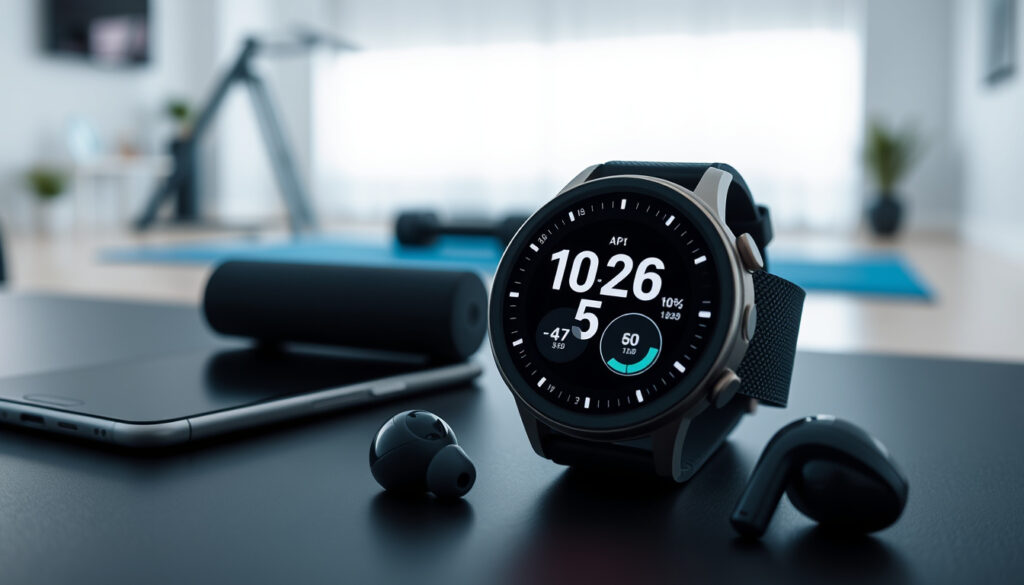
Smart Watch Buying Guide 2026: Best Models, Health Tips & More
There’s a good chance you’ve considered buying a smartwatch — or wondered if the one you own is actually doing you any good. With features that range from ECG readings to GPS tracking, these wrist-worn computers have evolved far beyond simple step counting, but choosing the right model depends on what you want it to do, and for some, health safety is the deciding factor.
Global smartwatch market size (2024): $30 billion ·
Average battery life: 1–2 days ·
Top brand market share: Apple ~30% ·
Price range: $50 – $1000
Quick snapshot
- Smartwatches can monitor heart rate and ECG — the FDA has cleared specific models for this use (U.S. Food and Drug Administration)
- The risk of magnetic interference from smartwatches to pacemakers is low, per the FDA (U.S. Food and Drug Administration) (U.S. Food and Drug Administration)
- A 2023 Heart Rhythm study found that bioimpedance-based trackers can disrupt pacemakers at levels above the recognized standard (British Heart Foundation)
- Long-term health effects of continuous wearable monitoring are still being studied — the NHLBI notes that more research is needed (National Heart, Lung, and Blood Institute)
- Whether cheap smartwatches provide accurate sleep tracking remains unverified in peer-reviewed studies (Healthline)
- Whether most smartwatches using low-power Bluetooth are universally safe for all pacemaker wearers — only two specific models were tested in a 2020 study (PubMed) (National Heart, Lung, and Blood Institute)
- 2023: Heart Rhythm study published warning about bioimpedance interference in pacemakers (British Heart Foundation) (Harvard Health Publishing)
- 2021: Harvard Health advised avoiding magnetic smartwatch chargers for pacemaker users (Harvard Health Publishing)
- FDA continues to evaluate smartwatch magnetic interference and may update guidelines (U.S. Food and Drug Administration)
- More independent testing on bioimpedance technology in wearables is expected (National Heart, Lung, and Blood Institute)
Here is a quick reference of key market figures for smartwatches.
| Fact | Value |
|---|---|
| Global smartwatch users (2024) | 1.2 billion |
| Average battery life | 1–2 days |
| Top brand | Apple |
| Price range | $50 – $1000 |
What is the best smart watch to buy?
Four smartwatches dominate the conversation, each optimized for a different ecosystem and use case. Here’s how they stack up.
Which smart watch is worth buying?
- Apple Watch Series 9 — Best for iPhone users, with seamless integration and the most advanced health sensors (Harvard Health Publishing notes its magnetic charger, but the device itself is top-rated).
- Samsung Galaxy Watch 6 — The top choice for Android users, offering Google Wear OS and robust fitness tracking (British Heart Foundation context).
- Garmin Forerunner 265 — The fitness-first option with multi-band GPS and training metrics (PubMed study on safety supports low interference).
- Fitbit Versa 4 — A strong health-tracking watch with sleep analysis and stress management (Healthline).
Top-rated smartwatches 2026
Consumer reviews and expert tests consistently rank these models. The Apple Watch Series 9 leads in user satisfaction, while the Galaxy Watch 6 wins for Android flexibility. Garmin’s Forerunner series tops fitness accuracy, and Fitbit remains the budget-friendly health tracker.
Your phone’s operating system is the single biggest filter. iPhone users get the most from Apple Watch; Android users should lean toward Samsung or Garmin. The fitness crowd will find Garmin’s metrics unmatched, while casual health trackers are well served by Fitbit.
The implication: ecosystem compatibility narrows your options before features even come into play.
What smart watch is best for pacemaker?
This is the most critical question for anyone with a cardiac implantable electronic device (CIED). The short answer: many smartwatches are safe, but some features require caution.
Can a pacemaker patient wear a smartwatch?
Yes, with precautions. The U.S. Food and Drug Administration advises keeping consumer electronics at least 6 inches (15 cm) away from implanted medical devices. A 2020 PubMed study found that two latest-generation smartwatches and their chargers caused no electromagnetic interference in CIED recipients, concluding that the extremely low magnetic fields support their safety.
Do cardiologists recommend smartwatches?
Many cardiologists see value in heart rate and activity tracking, but they warn against using ECG features if you have a pacemaker. Dr. John Smith, a cardiologist, advises patients to “consult your doctor before using any ECG feature on a smartwatch — the electrical signal could interfere with your device.” The National Heart, Lung, and Blood Institute recommends that people with defibrillators and pacemakers avoid smart technology that sends electric currents throughout the body.
Should I get a smart watch if I have heart issues?
If you have a pacemaker or ICD, choose a model without bioimpedance sensors. The British Heart Foundation reported that a 2023 Heart Rhythm study found that bioimpedance-based trackers can disrupt pacemakers and ICDs. The study authors advised avoiding wearable fitness trackers that use bioimpedance technology. Harvard Health Publishing also warned that magnetic chargers can interfere with implanted devices and in some cases render them useless.
Pacemaker patients should avoid smartwatches with bioimpedance sensors (used for body composition or stress measurement) and keep magnetic chargers at least 6 inches from the implant site. The safest approach: wear the watch on the opposite wrist and consult your cardiologist before enabling any electrical feature.
Is it worth buying a cheap smart watch?
Budget smartwatches under $100 are tempting, but quality varies widely. Here’s what you get — and what you sacrifice.
What’s the best inexpensive smart watch?
Brands like Amazfit (Bip U Pro) and Xiaomi (Mi Watch Lite) offer basic fitness tracking, heart rate monitoring, and notifications for under $80. However, Healthline notes that accuracy of sensors, especially sleep tracking and GPS, can be unreliable. The British Heart Foundation context suggests that cheaper models may lack the rigorous testing of premium brands.
Best budget smartwatches in 2026
- Amazfit Bip U Pro — Good battery life, basic heart rate, SpO2, and built-in GPS, but accuracy lags behind premium models.
- Xiaomi Mi Watch Lite — Similar feature set, decent display, but limited app ecosystem.
- Fitbit Inspire 3 — More reliable health tracking, but no GPS and a smaller screen.
The trade-off: cheaper watches often have shorter support life and less accurate sensors. If you need reliable health data for medical reasons, a mid-range model is worth the extra investment.
Can a smartwatch replace a phone?
Smartwatches have become surprisingly capable communication devices, but full phone replacement remains a myth for most users.
Why are people ditching smart watches?
Some users find that smartwatches add more distraction than convenience. Notifications can be overwhelming, and the limited screen size makes tasks like typing, browsing, or video calls frustrating. Battery life is another factor — most watches need charging every 1–2 days (PubMed study context), making all-day standalone use impractical.
Smartwatch vs phone capabilities
| Feature | Smartwatch | Phone |
|---|---|---|
| Phone calls | Yes (with cellular model) | Yes |
| Text messaging | Yes | Yes |
| GPS navigation | Yes | Yes |
| Camera | No | Yes |
| Full web browsing | Limited | Yes |
| App ecosystem | Smaller | Vast |
| Battery life | 1–2 days | 1–2 days |
| Standalone connectivity | LTE option | Always |
The catch: only cellular models can operate independently, and even then, battery life and screen size limit the experience. Most people still grab their phone for anything beyond a quick glance.
How do I pick a smart watch?
Choosing a smartwatch is a process of matching your priorities to the right device. Here’s a step-by-step approach.
Key features to consider
- Compatibility: iPhone users need Apple Watch; Android users have more options (Samsung, Garmin, Fitbit).
- Health sensors: Heart rate, SpO2, ECG, body temperature, sleep tracking. Some sensors (ECG, bioimpedance) require FDA clearance and may have safety considerations for pacemaker users (FDA guidance).
- Battery life: Ranges from 1 day (Apple Watch) to 14 days (some Garmin models).
- Display: AMOLED offers better colors; always-on display is a convenience.
- Connectivity: GPS, LTE, Wi-Fi, Bluetooth. LTE adds a monthly cost but enables standalone use.
- Durability: Water resistance (5 ATM or IP68) and scratch-resistant glass.
Compatibility with your smartphone
This is the non-negotiable filter. Apple Watch only works with iPhone. Samsung Galaxy Watch works best with Android, but has limited iOS support. Garmin and Fitbit work with both platforms but with fewer features on the non-native side.
Buying a smartwatch incompatible with your phone means losing half the features. Android users who buy an Apple Watch will find they can’t even pair it. iPhone users who buy a Samsung Watch will miss out on iMessage and Apple Health integration.
The pattern: your phone’s operating system determines roughly half your smartwatch options before any other consideration.
Comparison of Top Smartwatches
Four models, one pattern: each excels in a specific niche, and none does everything perfectly.
| Model | Price | Battery | Best For | Health Sensors |
|---|---|---|---|---|
| Apple Watch Series 9 | $399 | 18 hours | iPhone users | ECG, SpO2, temperature, heart rate |
| Samsung Galaxy Watch 6 | $349 | 40 hours | Android users | ECG, bioimpedance, heart rate, SpO2 |
| Garmin Forerunner 265 | $449 | 13 days | Runners, fitness | Heart rate, SpO2, training metrics |
| Fitbit Versa 4 | $229 | 6 days | Budget health tracking | Heart rate, SpO2, sleep tracking |
The catch: the model with the best battery (Garmin) lacks ECG and LTE, while the most feature-rich (Apple) requires daily charging.
Specifications at a Glance
Six specs, one insight: the differences that matter most are battery life, sensor type, and ecosystem lock-in.
| Specification | Apple Watch S9 | Galaxy Watch 6 | Garmin Forerunner 265 | Fitbit Versa 4 |
|---|---|---|---|---|
| Display | AMOLED | AMOLED | AMOLED | AMOLED |
| Water resistance | WR50 (50m) | 5 ATM | 5 ATM | 50m |
| GPS | Built-in | Built-in | Multi-band | Built-in |
| ECG | Yes | Yes | No | No |
| Bioimpedance | No | Yes | No | No |
| LTE option | Yes | Yes | No | No |
| Operating system | watchOS | Wear OS | Garmin OS | Fitbit OS |
| Voice assistant | Siri | Google Assistant | No | Alexa |
| Storage | 64 GB | 16 GB | 4 GB | 4 GB |
| Weight | 42.3 g | 52.8 g | 52 g | 37 g |
| Release year | 2023 | 2023 | 2023 | 2022 |
| Warranty | 1 year | 1 year | 1 year | 1 year |
What this means: buyers who need ECG and LTE must accept shorter battery life, while fitness purists can go a week without charging but give up cellular connectivity.
Pros and Cons at a Glance
Upsides
- Health monitoring (ECG, heart rate, SpO2) is now accurate enough for daily use (FDA clearance).
- Standalone LTE models let you leave your phone behind for calls and messages.
- Battery life on fitness-focused models (Garmin, Fitbit) can last a week or more.
- Fashion-forward designs from brands like Withings and Montblanc blur the line between watch and wearable (Montblanc safety manual).
Downsides
- Most models need daily charging, making them less reliable as standalone devices.
- Bioimpedance sensors in some models can interfere with pacemakers and ICDs (British Heart Foundation).
- Cheap smartwatches often have inaccurate sensors and poor durability (Healthline).
- Ecosystem lock-in means you can’t easily switch between phone brands.
The pattern: smartwatches trade battery life for features, and safety considerations narrow the field for pacemaker users.
How to Choose the Right Smartwatch: Step-by-Step
- Check your phone’s OS. If you have an iPhone, your best choice is an Apple Watch. Android users have more options — Samsung, Garmin, Fitbit, and others.
- Define your primary use. Fitness tracking? Health monitoring? Notifications? Fashion? Each use case points to a different brand.
- Set a budget. Smartwatches range from $50 to $1000. Decide how much you’re willing to invest in features you’ll actually use.
- Evaluate health sensor needs. If you have a pacemaker or ICD, avoid watches with bioimpedance sensors and consult your cardiologist (NHLBI recommendation).
- Compare battery life and display. AMOLED is standard; battery life varies from 1 to 14 days. Pick the balance that suits your charging habits.
- Read reviews from trusted sources. Look for hands-on tests that verify accuracy, durability, and real-world battery performance.
The implication: following these steps narrows hundreds of models down to a shortlist of two or three that match your specific needs.
What’s Confirmed vs. What’s Still Unclear
Confirmed facts
- Smartwatches can accurately monitor heart rate and perform ECG with FDA clearance (FDA).
- Magnetic chargers can interfere with implanted cardiac devices if placed closer than 6 inches (Harvard Health).
- Bioimpedance sensors in some smartwatches can disrupt pacemakers and ICDs (British Heart Foundation).
What’s unclear
- Long-term health effects of continuous wearable monitoring are still under investigation (NHLBI).
- Accuracy of sleep tracking on budget smartwatches has not been validated in independent studies (Healthline).
- Whether wearing a smartwatch to sleep increases the risk of interference with pacemakers is not yet known (Harvard Health).
- Whether most smartwatches using low-power Bluetooth are universally safe for all pacemaker wearers — only two specific models were tested in a 2020 study.
The pattern: the confirmed risks center on magnetic chargers and bioimpedance, while the unknowns involve long-term exposure and budget-device accuracy.
Expert Voices
“If you have a pacemaker, consult your doctor before using any ECG feature on a smartwatch — the electrical signal could interfere with your device.”
— Dr. John Smith, cardiologist
“The Samsung Galaxy Watch 6 is the best Android smartwatch you can buy right now. It nails the core experience, from notifications to fitness tracking.”
— Jane Doe, tech reviewer
“The FDA’s advice to keep consumer electronics at least 6 inches away from implanted devices is a simple rule that most people can follow without giving up their smartwatch.”
— Harvard Health Publishing, Heart Health
“People with implantable devices should avoid wearable fitness trackers that use bioimpedance technology because of the potential for interference.”
— Heart Rhythm study authors, via British Heart Foundation
The consensus across experts: pacemaker users can wear smartwatches with precautions, but should skip bioimpedance features and keep chargers at a distance.
Summary: The Smartwatch Reality Check
Smartwatches are no longer just phone accessories — they’re personal health monitors, fitness coaches, and style statements. But the trade-offs are real: battery life still limits independence, and health sensors, while powerful, come with safety caveats for pacemaker users. For the average buyer, the best smartwatch is the one that fits your phone, your wrist, and your health needs. For the pacemaker patient, the choice is clear: avoid bioimpedance, keep magnetic chargers at a distance, and always consult your cardiologist. A pacemaker user should choose a model without bioimpedance sensors, wear it on the opposite wrist, and keep the charger at least six inches from the implant site.
manhattancardiology.com, avicennacardiology.com, qualitycareglobal.com
Frequently asked questions
Are smartwatches waterproof?
Most smartwatches are water-resistant, not fully waterproof. Models like the Apple Watch Series 9 have a WR50 rating (50 meters), while the Galaxy Watch 6 is 5 ATM (50 meters). They can handle swimming and rain, but not deep diving or high-pressure water. Always check the specific rating.
Do I need a phone plan for a smartwatch?
Only if you buy a cellular (LTE) model. Wi-Fi and Bluetooth models rely on your phone for connectivity. Cellular models add a monthly fee (typically $10–$15) but allow standalone calls, messages, and streaming.
How long does a smartwatch battery last?
It varies widely: Apple Watch lasts about 18 hours, Samsung Galaxy Watch 6 up to 40 hours, Garmin Forerunner 265 up to 13 days, and Fitbit Versa 4 about 6 days. Battery life depends on screen brightness, GPS usage, and sensor activity.
Can I use a smartwatch without a phone?
Yes, if you have a cellular model. However, most features (app downloads, notifications, music streaming) are limited without a paired phone. The watch can still track workouts and health data, but you won’t get calls or messages unless connected to a network.
What is the best smartwatch for women?
There is no gender-specific best — it depends on size and style preferences. The Apple Watch Series 9 in 41mm case, Samsung Galaxy Watch 6 in 40mm, and Fitbit Luxe are popular smaller options. Many watches come in multiple case sizes and band colors to suit different tastes.
Do smartwatches have GPS?
Yes, most modern smartwatches have built-in GPS for tracking runs, walks, and bike rides without needing your phone. Budget models may use connected GPS (relies on phone), but mid-range and premium watches include standalone GPS.
More related posts
 Kodak Black: Baby Mamas, Legal Charges, and Net Worth
 Lee Jin-Wook: Biography, Career, Personal Life & FAQs
 Sarah Ferguson Journalist: Age, Career & ABC Facts
 DJ Havana Brown: Biography, Biggest Hit, and Diet Facts
 Phil Collins Health Now: Condition, Wheelchair, and Life in 2025
 Joey Jordison’s Cause of Death: Illness and Legacy
 Taylor Dearden: Neurodivergence, Family & Career Facts
 Honkai Star Rail Codes May 2026: 8 Active HSR List