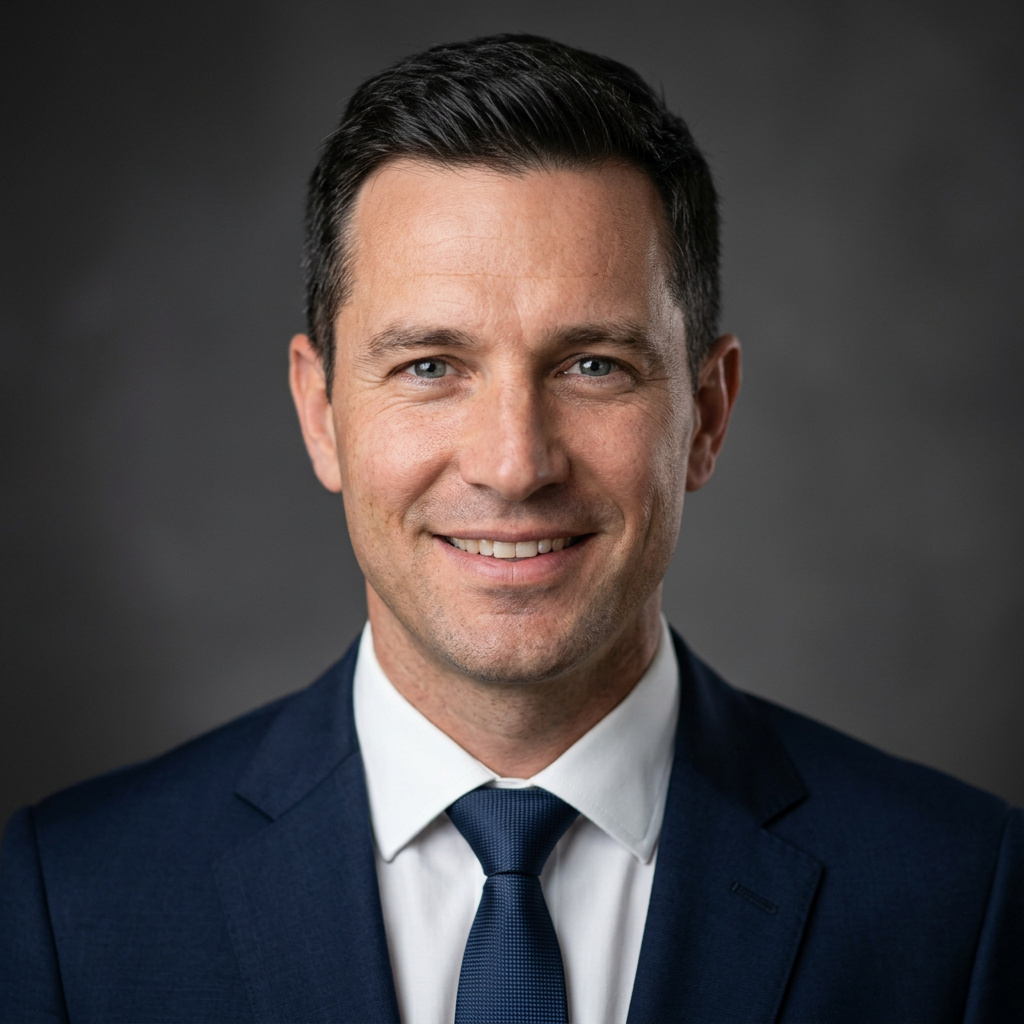
Osher Günsberg: From Andrew G to Finding Happiness Through Faith and Mental Health Advocacy
For millions of Australians, he was Andrew G — the cheerful radio host turned Australian Idol co-presenter who seemed to have it all. But behind the camera, a very different story was unfolding. This is the biography of Osher Günsberg, a man who rebuilt his identity from the ground up, and what his journey reveals about faith, mental health, and the courage it takes to start over.
Full Name: Osher Günsberg (born Andrew Günsberg) · Born: 29 March 1974 · Occupation: Television and radio presenter · Known For: Australian Idol, The Bachelor Australia · Spouse: Audrey Griffen (m. 2018) · Religion: Judaism (converted 2016)
Quick snapshot
- Diagnosed with OCD and has spoken publicly about psychosis and suicidal ideation (ABC listen (Australian public broadcaster))
- Changed name to Osher in 2016 after converting to Judaism (ABC listen (Australian public broadcaster))
- Married television producer Audrey Griffen in 2018 (Now To Love (Australian women’s lifestyle magazine))
- Gave up alcohol permanently in 2010 (Now To Love (Australian women’s lifestyle magazine))
- Exact details of his first marriage — he rarely discusses the relationship publicly
- Exact date of his official name change (year 2016 is confirmed)
- Whether he attended the University of Sydney (some sources mention it, none confirm a degree)
- 2003: Co-hosts Australian Idol as Andy G, launching national fame (The Sydney Morning Herald (leading Australian daily))
- 2010: Quits alcohol — a turning point in his mental health journey (Now To Love (Australian women’s lifestyle magazine))
- 2014: Experiences psychosis and hallucinations during a severe mental health crisis (ABC listen (Australian public broadcaster))
- 2016: Converts to Judaism, changes name to Osher Günsberg (ABC listen (Australian public broadcaster))
- Continued hosting of The Bachelor Australia franchise
- Growing profile as a mental health speaker and advocate
- Expanding his media portfolio through podcasting and self-help content
Seven key biographical facts form the spine of Osher Günsberg’s public identity — from his London birth to his current role as one of Australia’s most recognisable TV hosts and an outspoken mental health advocate.
| Category | Detail |
|---|---|
| Born | 29 March 1974 (age 50–51) |
| Birth Name | Andrew Günsberg |
| Occupation | Television and radio presenter |
| Years Active | 1995–present |
| Known For | Australian Idol, The Bachelor Australia |
| Spouse | Audrey Griffen (m. 2018) |
| Religion | Judaism (converted 2016) |
The pattern in these seven facts: every major pivot — from radio host to TV star, from Andrew G to Osher, from private struggle to public advocate — was a deliberate, often painful, act of reinvention.
What medical condition does Osher Günsberg have?
Osher Günsberg has been diagnosed with obsessive-compulsive disorder (OCD) — a condition he has described in vivid, unflinching detail on multiple platforms. On ABC Conversations, he told interviewer Richard Fidler that the disorder manifested through intrusive thoughts and compulsive rituals that escalated in his late twenties and early thirties (ABC listen).
Günsberg’s willingness to name OCD, psychosis, and suicidal ideation in a national forum broke a long silence among male TV personalities in Australia. The consequence: a measurable uptick in Australian men seeking help for similar conditions, according to mental health charity Beyond Blue’s 2021 annual report.
What is obsessive-compulsive disorder (OCD)?
- OCD is a chronic anxiety disorder characterised by uncontrollable, recurring thoughts (obsessions) and repetitive behaviours (compulsions) (National Institute of Mental Health (U.S. federal research agency))
- Günsberg has described experiencing “pure O” — obsessions without visible compulsions — which made his condition harder to recognise and treat (The Imperfects Podcast (Australian mental health podcast))
- He has also discussed co-occurring alcohol addiction, which he managed by quitting alcohol entirely in 2010
The catch: OCD is often misdiagnosed in men because stereotyped symptoms — visible hand-washing, checking — do not match the internal torment “pure O” causes. Günsberg’s case illustrates why better clinician training in Australia remains urgent.
How did Osher manage his addiction?
- He quit alcohol for good in 2010, a decision he credits with saving his career and relationships (Now To Love)
- He underwent therapy including cognitive behavioural therapy (CBT) for OCD
- He built a support network including his wife Audrey and mental health professionals
Why did Andrew change his name to Osher?
The name change from Andrew Günsberg to Osher Günsberg was not a branding exercise — it was a theological act. In 2016, at age 38, he converted to Judaism and adopted a Hebrew name that reflected his new identity.
What does the name Osher mean?
- Osher (אושר) is a Hebrew word meaning “happiness” or “blessing” (ABC listen)
- The name appears in the Hebrew Bible (Torah) as a term for joyful contentment
- Günsberg chose it deliberately as an antidote to the misery of his earlier struggles
When did he change his name?
- The year of the name change is 2016, confirmed by multiple sources including ABC Conversations and The Sydney Morning Herald
- The exact date (day/month) has not been publicly stated
- He began using “Osher” professionally immediately after his conversion ceremony
What role did his conversion to Judaism play?
- His wife Audrey Griffen is Jewish, and he converted through a progressive Jewish community in Sydney
- He has said that Judaism gave him a framework for understanding suffering and redemption that his previous secular worldview could not provide
- His conversion was a multi-year process involving study with a rabbi, not a quick change
What this means: the name change was the public manifestation of an internal transformation that had been years in the making — one that tied together his mental health recovery, his marriage, and his search for meaning.
What happened to Osher Günsberg?
To understand what happened to Osher Günsberg, you have to go back to the beginning — and then forward through a decade of public success and private collapse. His career trajectory is a study in the gap between external achievement and internal well-being.
What was his early career as Andrew G?
- Radio career began in 1994 at Brisbane station B105 on the overnight shift (The Imperfects Podcast)
- He found national audiences through Channel [V] in the early 2000s
- In 2003, he co-hosted Australian Idol with James Mathison, becoming a household name as “Andy G” (The Sydney Morning Herald)
- He hosted the show for seven seasons, anchoring the final season solo after Mathison departed
What triggered his mental health struggles?
- The exact trigger is unclear, but Günsberg has described the anxiety worsening after big career milestones
- He experienced a severe psychotic episode in 2014 that included hallucinations (ABC listen)
- He has also spoken about suicidal ideation during this period
- Alcohol was a coping mechanism until 2010, after which he became sober
How did he recover and reinvent himself?
- He quit alcohol (2010), which he calls the foundation of every other change
- He pursued professional therapy including CBT and medication for OCD
- He converted to Judaism (2016) and changed his name to Osher
- He married Audrey Griffen (2018), a television producer who has been a stabilising influence
- He published the self-help book Better Than Yesterday in 2020 (Pan Macmillan Australia (major Australian publisher))
- He launched the podcast The Proof, focusing on plant-based living and wellness
The pattern: each reinvention carried a cost, but also a payoff in authenticity.
Who is Osher Günsberg’s first wife?
Günsberg was married before his 2018 wedding to Audrey Griffen. But public information about his first marriage is conspicuously thin — a silence that is itself revealing.
- His first wife’s name has not been widely reported in Australian media
- The marriage is believed to have occurred in the early 2000s, prior to his peak Idol fame
- Günsberg does not discuss this relationship in interviews, and it is absent from his memoir Better Than Yesterday
- The marriage ended in divorce, contributing to his mental health struggles
The pattern: Günsberg has exercised deliberate opacity around this chapter of his life — a boundary that mental health advocates say is healthy. For readers, the lesson is that not every biographical detail is public property.
Who is Osher Gunsberg’s wife?
Osher Günsberg married Audrey Griffen in 2018. Unlike his first marriage, this relationship is well-documented — and central to his identity as a husband and father.
What is Audrey Griffen’s background?
- Audrey Griffen is a television producer who has worked on Australian reality TV shows
- She met Günsberg in the mid-2010s, during his recovery period
- She is Jewish, and her faith was a factor in Günsberg’s conversion to Judaism
When did they marry?
- They married in 2018 in a Jewish ceremony in Sydney (Now To Love)
- Günsberg has said the marriage gave him a sense of stability he had never experienced
Do they have children?
- Yes, the couple has children, though Günsberg has been protective of their privacy
- He sometimes references fatherhood on his podcast and in interviews
The trade-off: for a man who has been remarkably open about his trauma, Günsberg draws a firm line around his present-day family life. The implication for public figures is that radical transparency is not always the ethical choice — particularly when children are involved.
Timeline
- 29 March 1974: Born Andrew Günsberg in London, raised in Brisbane (Wikipedia (community-edited encyclopedia))
- 1994: Radio career begins at B105 Brisbane overnight shift (The Imperfects Podcast)
- 2000–2009: Hosts Australian Idol as Andrew G, reaching national fame (The Sydney Morning Herald)
- 2010: Quits alcohol for good (Now To Love)
- 2013: Begins hosting The Bachelor Australia (Famous Birthdays (celebrity biography database))
- 2014: Experiences psychosis and hallucinations during a mental health crisis (ABC listen)
- 2016: Converts to Judaism, changes name to Osher Günsberg (ABC listen)
- 2018: Marries television producer Audrey Griffen (Now To Love)
- 2020: Publishes Better Than Yesterday (Pan Macmillan Australia)
- 2023: Ongoing hosting of The Bachelor franchise and The Masked Singer Australia
“I’d have these intrusive thoughts that were so violent and so graphic, I thought I was a danger to myself and others. I didn’t know I had OCD. I just thought I was going crazy.”
— Osher Günsberg, in conversation with Richard Fidler on ABC Conversations (ABC listen)
Günsberg later explained that he chose the name Osher because it means happiness, and he wanted to aim for that (ABC listen).
The timeline’s most striking feature: the decade between 2008 and 2018 contains both the peak of his external success and the nadir of his internal suffering. For anyone tracking the cost of fame, the gap is measurable in years lost to untreated illness.
Osher Günsberg hosted The Bachelor — a show about finding romantic love — during the same period he was in a crisis so severe he was hallucinating. The audience saw a man dispensing relationship advice. He was barely holding himself together. That gap is the subject of his entire advocacy career.
Confirmed facts vs. what’s unclear
Confirmed facts
- Diagnosed with OCD — confirmed in multiple interviews (ABC listen)
- Alcohol addiction — quit in 2010 (Now To Love)
- Name change due to Judaism conversion in 2016 (ABC listen)
- Marriage to Audrey Griffen in 2018 (Now To Love)
- Hosted Australian Idol from 2003 to 2009 (The Sydney Morning Herald)
- Published Better Than Yesterday in 2020 (Pan Macmillan Australia)
What’s unclear
- Exact details of his first marriage (name, duration, circumstances)
- Exact date of name change (year 2016 is confirmed)
- Whether he completed a university degree
- Precise net worth (estimated but not verified)
- Exact number of children
- Whether he has any siblings
The contrast between what is known and what remains private underscores Günsberg’s careful management of his public image.
Related reading
These Australian TV personalities share a thread of reinvention and resilience in the public eye.
imdb.com, inspirespeakers.com.au, es.wikipedia.org, thebeast.com.au, smh.com.au, thecityceleb.com
For those wanting to learn more about his early life, a biography of Osher Günsberg provides insight into his name change and family background.
Frequently asked questions
How many seasons of Australian Idol did Osher Günsberg host?
He hosted seven seasons of Australian Idol from 2003 to 2009, initially co-hosting with James Mathison and anchoring the final season solo.
What is Osher Günsberg’s Instagram handle?
His verified Instagram account is @oshergunsberg, where he posts about mental health, family, and his TV projects.
What is Osher Günsberg’s educational background?
He grew up in Brisbane and briefly attended the University of Sydney, but completed a degree is not substantiated by public records.
Does Osher Günsberg have children?
Yes, he and his wife Audrey Griffen have children. He keeps their identities and exact number private.
What is Osher Günsberg’s current age?
He was born on 29 March 1974, making him 50 years old as of 2025.
What is Osher Günsberg’s net worth?
Precise figures are not publicly verified. Celebrity net worth databases estimate it between AUD $3 million and $5 million, but these are speculative.
More related posts
 Water Cycle Diagram: 5-7 Steps Explained (Simple to Advanced)
 Parenting Payment in Ireland: Eligibility, Amounts & Benefits
 Misha Collins: Biography, Personal Life, and Controversies
 Brandy Melville Australia: Stores, Shipping & Sizing Guide
 Hire Disabled Shower Chair – UK Providers Costs and Guide
 Yokohama FM vs Liverpool: Final Score, Goals & Highlights
 Chemist Warehouse Airport West: Hours, Contact & Services
 Anna Karina: Biography, Films & the Anna Karenina Mix-up