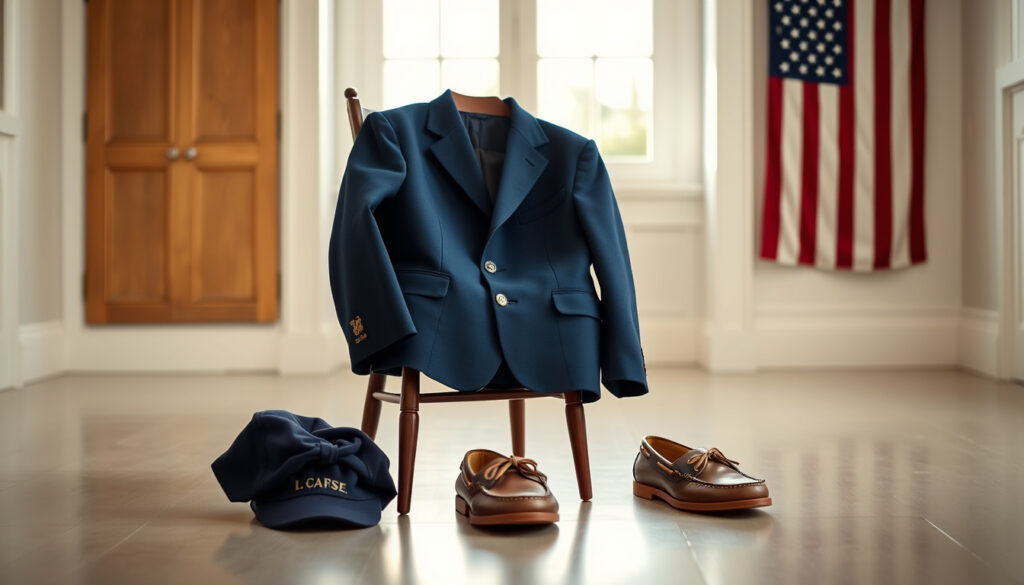
Tommy Hilfiger: Brand Analysis, History & Perception
Few fashion logos have sparked as much debate about status as Tommy Hilfiger’s red, white and blue crest. The answers reveal less about the clothes and more about how fashion culture shifts — in 2025, parent company PVH Corp reports roughly $9 billion in global retail sales for the brand, but its cultural pull looks very different than it did three decades ago.
Founded: 1985 ·
Parent company: PVH Corp ·
CEO: Martijn Hagman ·
Headquarters: New York City, USA
Quick snapshot
- Tommy Hilfiger was founded in 1985 PVH (parent company)
- Parent company is PVH Corp same source as above
- The brand is positioned as premium, not luxury Wharton (business school)
- Popularity peaked in the 1990s The Guardian (UK news outlet)
- Exactly why popularity declined is debated among fashion analysts Fashion Dive (industry news)
- Whether the brand can regain 1990s-level cultural influence remains uncertain (Fashion Dive (industry news))
- Specific sales figures for the Ireland and UK market are not publicly disclosed (Fashion Dive (industry news))
- 1985: First collection launched PVH
- 2010: PVH Corp buys the brand for ~$3 billion PVH annual report (via StockTitan)
- 2025: Retail sales ~$9 billion PVH
- The brand is working on revitalisation through collaborations (Sofia Richie Grainge, F1 The Movie) Global Textile Times (industry trade)
- PVH+ Plan aims to boost brand desirability Fashion Dive
The table below collects the core brand attributes from corporate filings and annual reports.
| Attribute | Detail |
|---|---|
| Founded | 1985 PVH |
| Founder | Tommy Hilfiger |
| Parent company | PVH Corp |
| CEO | Martijn Hagman |
| Headquarters | New York City, USA |
| Category | Premium lifestyle brand |
What happened to Tommy Hilfiger?
Did Tommy Hilfiger go out of fashion?
- The brand saturated the market in the 1990s and early 2000s, leading to logo fatigue.
- Youth fashion shifted toward streetwear and minimalism, away from logo-heavy preppy looks.
- Fast-fashion competitors eroded market share among younger buyers.
Is Tommy Hilfiger still popular in 2025?
- Tommy Hilfiger generated $1,135.9 million in sales in Q2 FY2025, up 3.9% year over year. Nasdaq (financial news)
- Revenue grew 3.4% in Q1 2025, with increases in the Americas and EMEA. Jing Daily (fashion business)
- More than half of sales come from outside the United States.
What caused the decline of Tommy Hilfiger?
- Overexposure in the 1990s made the brand feel common rather than aspirational.
- Competition from fast fashion (Zara, H&M) and emerging streetwear labels pulled attention away.
- A shift toward minimalism in the 2010s made logo-heavy designs feel outdated.
The pattern: declining cultural cachet did not translate to declining revenue. The brand grew sales even as its cool-factor faded — a split that defines its current paradox.
Tommy Hilfiger is simultaneously growing revenue and losing cultural cachet. The brand sells more clothes than ever, but the 1990s halo of cool — built on hip-hop endorsement — has faded for younger consumers who see it as their parents’ label.
Is Tommy Hilfiger a luxury brand?
Is Tommy Hilfiger considered high-end?
- Tommy Hilfiger himself said the brand does not have the luxury image of Louis Vuitton or Gucci. Wharton (interview with founder)
- He described the label as an “affordable premium design brand,” not a luxury house.
- A small luxury collection accounted for only 3% of sales at the time of the interview.
Is Tommy Hilfiger a premium brand?
- PVH categorises it as “one of the world’s most recognized premium lifestyle brands.”
- Price points sit above mass-market labels like Gap but well below true luxury houses. Polo shirts run $80–$120, jeans $100–$200, jackets $200–$500.
How does Tommy Hilfiger compare to luxury brands?
- The brand uses quality materials and aspirational marketing, but lacks the heritage, exclusivity, and price levels of Gucci, Prada, or Louis Vuitton.
- Industry analysts often place it in “accessible luxury” or “preppy lifestyle” — a tier below top luxury.
The implication: Tommy Hilfiger sits in a profitable middle ground — premium enough to feel aspirational to many shoppers, but mass enough to avoid the scarcity that defines true luxury. That positioning has kept revenue growing, even as its cultural status has shifted.
Why don’t people wear Tommy Hilfiger anymore?
Is Tommy Hilfiger out of style?
- The brand remains popular in certain markets (Europe, Asia) but has lost the “cool” factor in the US among younger Gen Z consumers.
- Logo-heavy apparel from the 1990s and early 2000s feels dated to fashion-forward shoppers who now prefer minimalist or streetwear brands.
Why did Tommy Hilfiger lose popularity?
- Overexposure: the brand was everywhere — from malls to discount outlets — which diluted its exclusivity.
- The rise of direct-to-consumer brands and fast fashion undercut its mid-market pricing.
- Marketing that once relied on celebrity endorsements (Britney Spears, Beyoncé in the early 2000s) has not yet fully resonated with Gen Z in the same way.
Is Tommy Hilfiger considered uncool?
- Among fashion critics, the brand is often seen as safe rather than daring.
- However, it retains appeal among older millennials and professionals who value its preppy, reliable aesthetic.
The catch: the same ubiquity that built a multi-billion-dollar business now works against the brand’s desirability among trendsetters.
Tommy Hilfiger traded exclusivity for scale in the 1990s. That move built a multi-billion-dollar empire, but it also made the brand a target for the “dad style” label. The same ubiquity that drove revenue now works against its desirability.
When did Tommy Hilfiger come out?
When was Tommy Hilfiger founded?
- The brand launched its first menswear collection in 1985.
- Founder Tommy Hilfiger had previously designed for other labels before striking out on his own.
What year did Tommy Hilfiger launch?
- The first collection debuted in 1985, and within two years a survey found 68% of sampled New Yorkers named Hilfiger among the top important designers.
- The company went public on the NYSE in 1992, a major milestone for the young brand.
What is the history of Tommy Hilfiger?
- 1990s: The brand became a cultural icon, particularly within hip-hop culture after artists like Snoop Dogg and Aaliyah wore it on stage.
- 2000s: Expansion into women’s, kids, and licensed products (fragrances, watches); global growth accelerated.
- 2010: PVH Corp acquired the brand for approximately $3 billion.
- 2020s: Collaborations with Raf Simons, Inga, Sofia Richie Grainge, and the F1 movie helped refresh the image.
Why this matters: The timeline shows a brand that grew fast, saturated its audience, and has spent the last decade trying to rebuild cachet without losing the mass appeal that keeps the balance sheet healthy.
Who buys Tommy Hilfiger?
What is the target audience of Tommy Hilfiger?
- Core demographic: adults aged 25–45, with a strong following in men’s apparel.
- The brand appeals to both casual and professional wardrobes — it fits a preppy, smart-casual style.
Is Tommy Hilfiger for young people?
- Recent marketing targets Gen Z through influencers and social media, but the brand still skews older compared to streetwear labels like Supreme or Off-White.
- Collaborations with younger celebrities (Sofia Richie Grainge) aim to lower the average age of buyers.
Who wears Tommy Hilfiger in 2025?
- The brand has a significant presence in the UK and Ireland, sold through Zalando, House of Fraser, and its own e-commerce site.
- It remains popular among international tourists and shoppers looking for reliable American heritage brands.
- The brand’s trajectory mirrors that of Jessica Simpson’s fashion empire — both built massive scale on licensing and celebrity, and now face the challenge of staying relevant.
The pattern: the brand’s strongest buyers are older professionals and international shoppers, while its revitalisation efforts target a younger cohort through collaborations.
Timeline signal
- 1985 – Tommy Hilfiger launches his first menswear collection.
- 1990s – Brand becomes a cultural icon, particularly in hip-hop and preppy fashion.
- 2010 – PVH Corp acquires Tommy Hilfiger for approximately $3 billion.
- 2020s – Brand revitalisation through collaborations (Raf Simons, Inga, Sofia Richie Grainge) and digital-first marketing.
- 2025 – Global retail sales ~$9 billion; revenue continues to grow.
Clarity section
Confirmed facts
- Tommy Hilfiger was founded in 1985.
- Parent company is PVH Corp.
- Positioned as a premium lifestyle brand, not luxury.
- Popularity peaked in the 1990s.
What’s unclear
- Exact reasons for the decline in popular perception are debated among analysts.
- Whether the brand can regain 1990s-level cultural influence.
- Specific sales figures for the UK and Ireland markets are not public.
- How Gen Z will perceive the brand in the long term.
“We are not Louis Vuitton or Gucci. We are an affordable premium design brand.”
Tommy Hilfiger, speaking to Wharton
“PVH describes Tommy Hilfiger as one of the world’s most recognized premium lifestyle brands, rooted in Americana and its red, white, and blue DNA.”
PVH Corporate Brand Page
The pattern across both statements: the brand’s own leadership and its corporate parent agree on the same positioning — premium, not luxury. That consistency is rare in fashion, and it anchors the brand’s long-term strategy.
Tommy Hilfiger is what its name says: a premium lifestyle brand that grew too big for its own coolness. For shoppers in Ireland browsing Zalando or House of Fraser, the choice is clear: buy a heritage label with consistent quality and a classic preppy look, but don’t expect the rarity or prestige of a true luxury house. For the brand itself, the challenge is to stay relevant without abandoning the scale that pays the bills.
Related reading: **Jessica Simpson: Net Worth, Divorce, and 2026 Tour Plans** · **Michael Portillo Biography: Wife, Career, and Style**
bayelsawatch.com, jingdaily.com, youtube.com, youtube.com, youtube.com
A detailed examination of Tommy Hilfigers luxury status reveals the nuances behind its current market perception.
Frequently asked questions
Is Tommy Hilfiger a cheap brand?
No. It is considered a premium brand. Polos cost $80–$120, jeans $100–$200, and jackets $200–$500. Prices are higher than mass-market brands but lower than true luxury labels.
Why is Tommy Hilfiger not popular anymore?
Overexposure in the 1990s, a shift toward minimalism and streetwear, and competition from fast fashion have all contributed to a decline in cultural cachet, even as revenue continues to grow.
Who wears Tommy Hilfiger?
The core demographic is adults aged 25–45, with strong appeal in men’s apparel. It is popular in Europe, Asia, and among tourists. Recent marketing targets Gen Z through influencer collaborations.
Is the Tommy Hilfiger brand expensive?
Relative to fast fashion, yes. Relative to luxury houses like Gucci or Louis Vuitton, no. It sits in the accessible premium tier.
What is the Tommy Hilfiger logo?
The logo is a red, white, and blue flag-inspired crest, often featuring the brand name in a serif font. It evokes Americana and preppy style.
Does Tommy Hilfiger have a sale in Ireland?
The brand runs seasonal sales on its own website and through retailers like Zalando and House of Fraser. Discounts can be found during Black Friday, end-of-season clearances, and special promotions.
How does Tommy Hilfiger compare to Ralph Lauren?
Both are premium American lifestyle brands with preppy roots. Ralph Lauren is generally considered more established and slightly higher in price, while Tommy Hilfiger has a more playful, pop-culture-infused image.
More related posts
 John Lennon: Death, Last Words & $31,000 Tooth Facts
 Jonathan Brown Brain Tumor: Surgery & Recovery
 Chadwick Aaron Boseman: Death, Cancer Battle & Legacy
 Domhnall Gleeson: Actor, Family, Movies & Pronunciation Guide
 Wendy Matthews Now: Age, Voice, and Current Life
 Engli h to Chine e Tran lator: Be t App & Accuracy Guide
 AgeMate Reviews: 15K+ User Ratings, Side Effects & Cost
 Andrew Scott: Relationship, Movies, and Personal Life