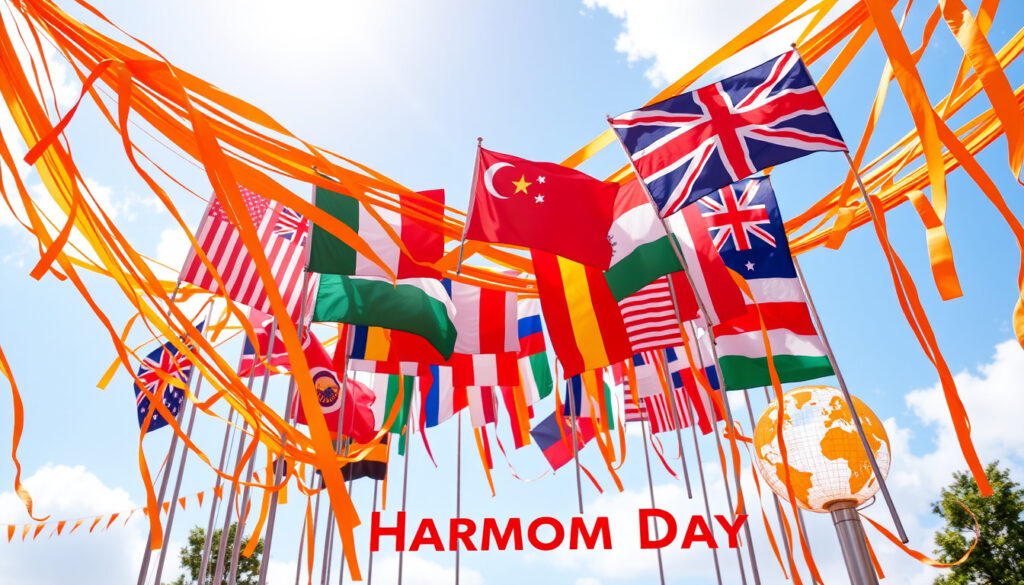
Harmony Day 2025 – Theme, Dates and Celebrations
Harmony Day 2025 was celebrated across Australia from March 17 to March 23, with the official Harmony Day recognition falling on March 21. The celebration centered on the theme “Everyone Belongs,” emphasizing cultural diversity, inclusiveness, and mutual respect regardless of race, religion, or background. Orange served as the designated color, with Australians encouraged to wear it as a visible show of support.
The observance coincided with the United Nations International Day for the Elimination of Racial Discrimination on March 21. Events took place throughout schools, communities, childcare centers, churches, businesses, and government agencies nationwide. Participation remained strong, continuing a tradition that began in 1999 and has grown to encompass more than 80,000 events since its inception.
Resources for hosting events and promoting the orange-themed celebration were available through the official government portal. Educational institutions played a particularly active role, integrating Harmony Day messages into curricula through artistic activities, cultural sharing sessions, and community gatherings designed to foster understanding among young Australians.
What is the Harmony Day 2025 theme?
The 2025 theme “Everyone Belongs” directed attention toward appreciating both the differences and similarities that exist among Australians. This messaging encouraged communities to recognize how cultural diversity strengthens social bonds and creates spaces where every person feels valued and included.
- The theme drew on messages about diversity’s power to unite communities across different backgrounds.
- Activities promoted sharing cultural traditions, learning new languages, and engaging in conversations that build unity.
- Schools encouraged students to explore and celebrate their heritage through classroom activities and community events.
- The celebration aligned with the UN International Day for the Elimination of Racial Discrimination on March 21.
- Orange served as the official color, representing warmth, openness, and positive communication.
- More than 80,000 events have been held since Harmony Day began in 1999.
- Participation extended across all Australian states and territories through national and local initiatives.
| Fact | Details |
|---|---|
| Theme | Everyone Belongs |
| Harmony Day date | 21 March 2025 |
| Harmony Week | 17–23 March 2025 |
| Origin | Australian diversity celebration established 1999 |
| Official color | Orange |
| UN alignment | International Day for the Elimination of Racial Discrimination |
| Total events since 1999 | Over 80,000 |
| Next celebration | 16–22 March 2026 |
When is Harmony Day 2025?
Harmony Day 2025 was officially observed on Friday, March 21, coinciding with the United Nations International Day for the Elimination of Racial Discrimination. However, the broader Harmony Week 2025 extended from Monday, March 17 through Sunday, March 23, providing a full week of activities and recognition opportunities.
Understanding Harmony Week 2025
The expansion from a single day to a full week occurred in 2019 under the Morrison government, allowing schools, workplaces, and communities greater flexibility in scheduling activities. This extended timeframe accommodated diverse participation methods, from single classroom sessions to week-long cultural festivals.
Harmony Day 2026
Planning for future observances has already begun, with Harmony Week 2026 scheduled for March 16–22. The UN International Day for the Elimination of Racial Discrimination will again fall within this period on March 21, maintaining the alignment that has defined the celebration since its establishment.
Schools and organizations wishing to participate in 2026 can use the official portal at harmony.gov.au to access resources, register events, and stay informed about upcoming activities.
What is Harmony Day and why is it celebrated?
Harmony Day originated in 1999 under the Howard government as Australia’s official celebration of cultural diversity. The observance was deliberately timed to coincide with March 21, the date selected by the United Nations for the International Day for the Elimination of Racial Discrimination, creating a direct connection between national values and international human rights commitments.
The celebration emphasizes mutual respect and inclusiveness as core Australian values, promoting understanding that cultural, religious, and ethnic differences contribute to community strength rather than division. This message resonates particularly in educational settings, where young Australians develop their understanding of national identity and multiculturalism.
Values at the heart of the celebration
- Inclusiveness: Creating spaces where people from all backgrounds feel welcome and valued
- Respect: Recognizing and appreciating different cultures, traditions, and perspectives
- Empathy: Understanding others’ experiences and building emotional connections across differences
- Unity: Strengthening community bonds through shared participation in cultural activities
- Belonging: Ensuring every person feels they have a rightful place in Australian society
Harmony Day 2025 events in Australia
Events throughout Australia during Harmony Week 2025 ranged from small classroom activities to large community gatherings. Schools played a particularly prominent role, with educational institutions across the country incorporating the celebration into their programs through creative activities designed to engage students of all ages.
School and early education activities
Educational settings showcased diverse approaches to celebrating cultural diversity. Programs taught respect, empathy, and inclusion through hands-on activities rather than purely instructional methods. Specific examples from participating schools illustrated the variety of approaches used to engage young people with the celebration’s messages.
Hills Montessori elementary school incorporated songs about togetherness, created orange fingerprint unity trees representing community connection, and developed skin tone portrait canvases celebrating human diversity. Cultural engagement extended to Didgeridoo demonstrations, multicultural outfit discussions, and multicultural picnics featuring dishes such as Sri Lankan rice pudding and Korean sushi. Flags, maps, books, and cultural performances rounded out the programming.
Community and workplace participation
Beyond schools, events occurred in childcare centers, churches, businesses, and government agencies throughout the country. Common participation methods included wearing orange clothing or accessories, hosting multicultural morning teas, and organizing cultural showcases where participants could share traditions, food, music, and stories from their backgrounds.
Regional participation
While specific regional events for Sydney and NSW were not detailed in available sources, national celebrations organized by the Department of Home Affairs included activities across Australian states. Local schools and communities participated following established patterns, with regional variation depending on local initiative and organization.
Harmony Day 2025 poster and resources
Resources for Harmony Day 2025 were primarily accessible through the official government portal, which provided support for hosting events and promoting the orange-themed celebration. While specific downloadable posters were not detailed in available search results, the official site offered guidance for creating inclusive promotional materials and educational resources.
Available resources and support
- Official event hosting guidance available through harmony.gov.au
- Educational modules provided through organizations such as Life Education Queensland
- Creative activity ideas demonstrated in schools through programs like those at Hills Montessori
- Student competitions available through community organizations
Creating your own materials
Schools, parents, and community groups were encouraged to develop their own inclusive materials inspired by educational modules and example activities. The official portal supported these efforts by providing frameworks for event organization and promotion, while schools created original artwork, cultural displays, and community installations to mark the celebration.
Timeline of Harmony Day
- 1999 — Harmony Day established by the Howard government, timed to coincide with the UN International Day for the Elimination of Racial Discrimination on March 21
- 2019 — Morrison government expanded the observance from a single day to a full week, creating Harmony Week
- 2025 — Harmony Week celebrated March 17–23, with official Harmony Day on March 21, under the theme “Everyone Belongs”
What we know and what remains unclear
Confirmed information
- Theme was “Everyone Belongs”
- Week ran March 17–23, with Harmony Day on March 21
- Official color is orange
- Events occurred across schools, workplaces, and communities
- Origins date to 1999 under the Howard government
- 2026 scheduled for March 16–22
Information not fully established
- Comprehensive national events listing not publicly available
- Limited detail on specific Sydney or NSW regional activities
- Downloadable poster resources not specifically detailed in sources
- Complete list of participating organizations not confirmed
Background and purpose of Harmony Day
Harmony Day emerged from Australia’s commitment to multiculturalism as a foundational national value. The celebration reflects decades of immigration policy and cultural integration efforts that have shaped the country into one of the most diverse nations in the world, where people from hundreds of cultural backgrounds contribute to national life.
The connection to the UN International Day for the Elimination of Racial Discrimination ties Australian observance to global efforts against discrimination. March 21 carries particular significance following the 1960 Sharpeville massacre in South Africa, an event that prompted the UN to designate this date for education and reflection on racial discrimination and human rights.
The celebration’s core message—that Australia’s cultural diversity represents strength rather than division—continues to resonate as the nation addresses contemporary challenges around social cohesion and inclusion. Annual observance provides structured opportunities for communities to engage with these themes through participation in local events and activities.
Sources and official statements
Events celebrating cultural diversity occurred across Australia during Harmony Week, organized by childcare services, schools, churches, businesses, and government agencies.
Harmony Week 2025 runs from Monday 17 March to Sunday 23 March 2025, with International Day for the Elimination of Racial Discrimination on Friday 21 March 2025.
Summary
Harmony Day 2025, celebrated during Harmony Week from March 17–23, brought Australians together under the theme “Everyone Belongs” to celebrate cultural diversity and inclusiveness. The observance, which originated in 1999, has grown into a nationwide celebration involving tens of thousands of events across schools, communities, and workplaces. Orange served as the unifying color, with participants encouraged to wear it as a visible demonstration of support. While the official Harmony Day fell on March 21, aligned with the UN International Day for the Elimination of Racial Discrimination, activities throughout the week provided opportunities for diverse participation. Resources for hosting events and creating promotional materials remained available through official channels, with planning already underway for the 2026 celebration.
Frequently asked questions
When is the next Harmony Day after 2025?
Harmony Week 2026 is scheduled for March 16–22, with the official Harmony Day on March 21, 2026.
What does the orange color represent?
Orange represents the official Harmony Day color, chosen to symbolize warmth, openness, and positive communication during the celebration.
How many events have been held since Harmony Day began?
More than 80,000 events have been held since the celebration began in 1999, according to official records.
Who established Harmony Day?
Harmony Day was established in 1999 under the Howard government and expanded to Harmony Week in 2019 under the Morrison government.
What was the theme for Harmony Day 2025?
The 2025 theme was “Everyone Belongs,” directing attention toward appreciating both differences and similarities among Australians.
Where can I find resources for hosting a Harmony Day event?
Resources for hosting events and promoting the celebration are available through the official portal at harmony.gov.au.
More related posts
 Caramelised Onion Recipe – Foolproof Oil-Free Method
 Teri Hatcher Tragedy, Health Battles, and Life Story
 Luis Enrique: Biography, Daughter Xana, and PSG Triumph
 Andrew Bolt: Controversies, Career, and Key Facts
 James Gandolfini Cause of Death: Heart Attack at 51
 Charles Melton: Relationship, Baby, and Emmy-Nominated Roles
 PanOxyl Acne Wash Review: Does It Work & Where to Buy
 Sam Reid: Biography, Relationships, Singing and French