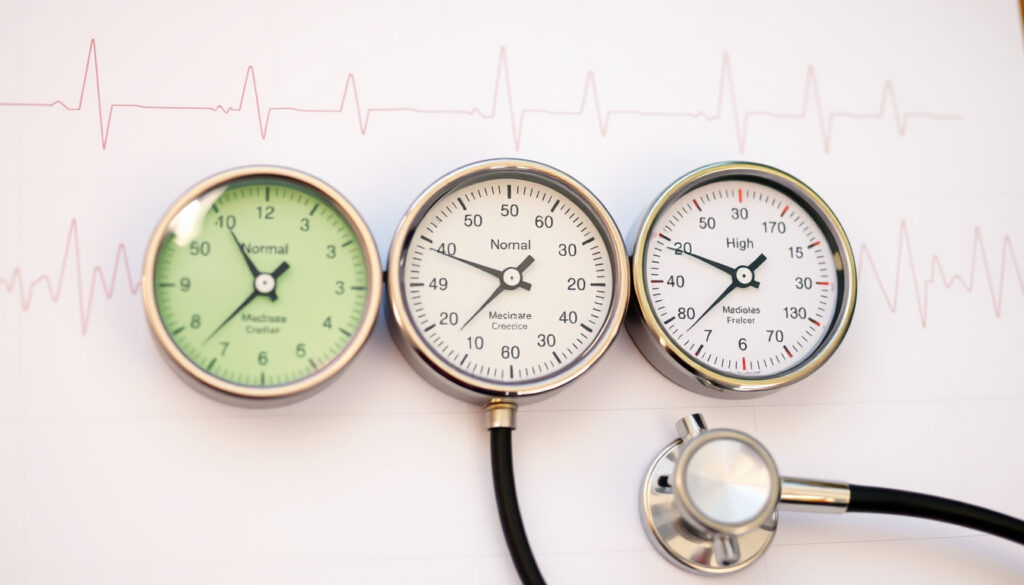
Blood Pressure Levels: Normal, High, and Danger Zones
Few numbers are as personal and potentially life-changing as the two digits of a blood pressure reading. Nearly half of all U.S. adults have high blood pressure, according to the Centers for Disease Control and Prevention (CDC) (federal public health agency), yet many people aren’t sure what their numbers mean or when they cross into dangerous territory. This guide walks through the exact thresholds set by the American Heart Association and other major medical bodies, from normal ranges for seniors to stroke-level crises, and answers the most common questions people ask when they see an unfamiliar reading.
Normal blood pressure (adults): Below 120/80 mm Hg ·
High blood pressure definition: 140/90 mm Hg or higher ·
Stroke-level threshold (urgent): 180/120 mm Hg or higher ·
U.S. adults with hypertension: Nearly 50% (CDC) ·
Ideal reading for seniors (≥65): Consistent below 130/80 mm Hg (ACC/AHA)
Quick snapshot
- Normal blood pressure is below 120/80 mm Hg (Cleveland Clinic (leading medical center))
- Hypertensive crisis begins at 180/120 mm Hg (American Heart Association (cardiology authority))
- TIA warning signs include face drooping, arm weakness, speech difficulty (American Stroke Association (stroke prevention authority))
- Optimal BP target for frail seniors over 80 is debated among guidelines (Journal of Clinical Preventive Practice (clinical review))
- No single “normal by age” standard exists for otherwise healthy 70+ without comorbidities (Journal of Clinical Preventive Practice (clinical review))
- Blood pressure typically highest in the morning after waking (circadian rhythm) (American Heart Association (cardiology authority))
- Lifestyle changes (reduce sodium, exercise) and medication if lifestyle alone insufficient (Harvard Health (Harvard Medical School’s health publication))
- Regular home monitoring recommended for anyone with elevated readings (Harvard Health (Harvard Medical School’s health publication))
| Category | Threshold | Source |
|---|---|---|
| Normal reading (adults) | Less than 120/80 mm Hg | Cleveland Clinic (leading medical center) |
| Hypertension diagnosis threshold | 130/80 mm Hg or higher | MedlinePlus Magazine (NIH health information) |
| Stroke-level crisis threshold | 180/120 mm Hg or higher | American Heart Association (cardiology authority) |
| U.S. adults with high BP | Approximately 47% (CDC, 2023) | CDC (federal public health agency) |
| Ideal senior target | Below 130/80 mm Hg (AHA) | Harvard Health (Harvard Medical School’s health publication) |
| Low blood pressure (hypotension) | Below 90/60 mm Hg | American Heart Association (cardiology authority) |
What is the new normal blood pressure for seniors?
Five categories, one key shift: in 2017 the American College of Cardiology and American Heart Association lowered the hypertension threshold for all adults, including those over 65, from 140/90 mm Hg to 130/80 mm Hg.
ACC/AHA 2017 guidelines for adults 65+
- Normal for seniors is below 120/80 mm Hg (American Heart Association (cardiology authority))
- Elevated is 120-129 systolic, less than 80 diastolic
- Hypertension stage 1 begins at 130/80
Why the threshold changed from 140/90 to 130/80
- Studies showed that cardiovascular risk increases steadily above 115/75 mm Hg (Harvard Health (Harvard Medical School’s health publication))
- The previous guideline (JNC 8) had set 150/80 for those 60+
- The 2017 change aimed to identify at-risk individuals earlier and reduce stroke and heart attack rates
For seniors, the same thresholds apply as for younger adults: below 120/80 is ideal. The exception: frail very elderly patients may have higher personalized targets.
What is a stroke level blood pressure?
Three danger zones, one non-negotiable rule: when the top number hits 180 or the bottom hits 120, that’s a hypertensive crisis and stroke risk skyrockets.
Hypertensive crisis threshold: 180/120 mm Hg
- Stroke-level: 180/120 or higher is a hypertensive crisis (American Heart Association (cardiology authority))
- Seek immediate care if systolic is above 180 or diastolic above 120 (Saebo (stroke rehabilitation resource))
- Baptist Health and AHA define this threshold
Difference between urgent and emergency hypertension
- Urgent: BP ≥180/120 but no symptoms of organ damage — can be managed with oral meds in ER
- Emergency: Same BP plus symptoms (chest pain, shortness of breath, vision changes) — requires IV medication and hospitalization (American Stroke Association (stroke prevention authority))
If your home monitor shows 180/120 or higher and you have any symptoms, do not wait — call 911. Even without symptoms, seek same-day medical evaluation.
Is 140 over 70 a good blood pressure?
A 140/70 reading presents a mixed picture: the systolic number is in stage 2 hypertension, but the diastolic is normal. The systolic number matters most for stroke risk in older adults.
Understanding 140/70 reading
- Systolic 140 qualifies as stage 2 hypertension (≥140 or ≥90) per AHA (American Heart Association (cardiology authority))
- Diastolic 70 is well within normal range
- Isolated systolic hypertension is common in older adults due to arterial stiffness
When to be concerned about 140/70
- If you are under 60 and have diabetes or kidney disease, target below 130/80 (Journal of Clinical Preventive Practice (clinical review))
- For otherwise healthy adults, 140/70 warrants lifestyle changes and possibly medication
- A single reading doesn’t define hypertension — need consistent high readings over time
The pattern: a high systolic with normal diastolic often signals reduced large-artery elasticity rather than excessive fluid volume. Treatment focuses on systolic control.
What is the danger zone of BP?
Two layers of danger: chronic damage begins at 140/90, acute emergency at 180/120.
Stage 2 hypertension: 140/90 or higher
- Danger zone for most adults is 140/90 or higher (American Heart Association (cardiology authority))
- Chronic high BP damages arteries and organs over years
- Sustained stage 2 hypertension increases risk of stroke, heart attack, kidney disease
Hypertensive crisis: 180/120 or higher
- Immediate danger is 180/120 or higher — requires emergency care (Saebo (stroke rehabilitation resource))
- Chronic danger: sustained high BP damages arteries and organs
Why this matters: the line between “dangerous over time” and “dangerous right now” is clear. Anyone with readings consistently above 140/90 should begin treatment, and anyone hitting 180/120 should get immediate help.
What should blood pressure be for over 70 year olds?
Four variables change the target: overall health, frailty, presence of diabetes or kidney disease, and medication tolerance.
Targets for healthy aging adults
- Target for seniors: below 130/80 mm Hg (Harvard Health (Harvard Medical School’s health publication))
- Higher targets may be set for frail or very elderly — e.g., systolic 130-140 if tolerated (European Society of Cardiology (ESC) (professional cardiology society))
- Individualized treatment per AHA and USPSTF
When medication is recommended for seniors
- If BP ≥150/90 sustained despite lifestyle changes, medication usually indicated (AAFP (American Academy of Family Physicians) (clinical guidance))
- For older adults with history of stroke or TIA, target systolic <140 (AAFP (clinical guidance))
- ESC suggests for very old/frail: systolic 130-140 mm Hg if tolerated
The trade-off: aggressive lowering in frail seniors can cause dizziness and falls. The goal is to reduce stroke risk without compromising quality of life.
How do I bring my blood pressure down quickly?
Three immediate steps can lower a reading temporarily, but never replace prescribed medication.
Immediate non-medical steps for a high reading
- Reduce sodium intake — avoid salty foods for a few hours
- Drink water if dehydrated — dehydration can raise BP
- Deep breathing for 5 minutes can lower systolic by 5-10 points (Harvard Health (Harvard Medical School’s health publication))
When quick lowering needs emergency care
- For readings above 180/120, call 911 (American Stroke Association (stroke prevention authority))
- Do not stop prescribed medication without doctor
- Home remedies (like drinking lemon water or apple cider vinegar) have no evidence for crisis scenarios
Quick lowering is temporary. If you regularly see readings above 140/90, the real solution is consistent lifestyle changes and, if needed, medication as prescribed by your doctor.
What are the 5 warning signs of a mini stroke?
Five signs, one acronym: F.A.S.T. — plus additional symptoms that demand immediate action even if they disappear.
FAST acronym for TIA signs
- F: Face drooping — one side of face numb or drooping
- A: Arm weakness — one arm drifts down when raised
- S: Speech difficulty — slurred or strange speech
- T: Time to call 911 — even if symptoms resolve (American Stroke Association (stroke prevention authority))
Additional symptoms of transient ischemic attack
- Sudden numbness or weakness on one side of body
- Confusion or trouble understanding speech
- Trouble seeing in one or both eyes, severe headache with no known cause
- TIA is a medical emergency even if symptoms resolve quickly — it often precedes a full stroke
The implication: a mini stroke is a warning shot. About 1 in 3 people who have a TIA will go on to have a stroke within a year if not treated.
What’s clear, what’s not
- Normal blood pressure is below 120/80 mm Hg (American Stroke Association (stroke prevention authority))
- Hypertensive crisis begins at 180/120 mm Hg (American Heart Association (cardiology authority))
- TIA warning signs include face drooping, arm weakness, speech difficulty (American Stroke Association (stroke prevention authority))
- Optimal BP target for frail seniors over 80 is debated among guidelines (Journal of Clinical Preventive Practice (clinical review))
- The exact “normal by age” varies; no single standard exists for otherwise healthy 70+ without comorbidities
“Keeping blood pressure below 130/80 mm Hg is recommended to help prevent a first-time stroke.”
American Heart Association (cardiology authority)
“Nearly half of U.S. adults have high blood pressure, yet many don’t know their own numbers.”
“A blood pressure reading of 180/120 or higher is a hypertensive crisis and requires immediate medical attention.”
Baptist Health, cited by Saebo (stroke rehabilitation resource)
The bottom line for anyone tracking their blood pressure: the numbers are meaningful markers of risk, not arbitrary figures. For healthy adults, any reading consistently above 130/80 deserves attention; for seniors, the same target applies unless frailty dictates otherwise. For the person staring at a 150/70 reading on their home monitor, the action step is clear: talk to your doctor about a management plan, and never ignore a reading of 180/120 or higher paired with symptoms. Your heart and brain depend on the choices you make when those two numbers appear.
Related reading: **Roman Reigns: Leukemia Battle, WrestleMania Win & Net Worth** · **Phil Collins Health Now: Condition, Wheelchair, and Life in 2025**
cprcare.com, healthline.com, health.harvard.edu, health.harvard.edu
Frequently asked questions
Can I lower my blood pressure with diet alone?
For many people with stage 1 hypertension, a low-sodium diet (especially the DASH diet) can reduce systolic BP by 5-10 points. But if readings remain above 130/80 after 3-6 months of improved diet and exercise, medication is usually recommended (American Heart Association (cardiology authority)).
What is the difference between systolic and diastolic?
Systolic (top number) measures pressure in arteries when the heart beats; diastolic (bottom number) measures pressure between beats. Both are important, but for adults over 50, systolic is the stronger predictor of stroke risk (American Heart Association (cardiology authority)).
Is coffee bad for high blood pressure?
Caffeine can cause a temporary spike in blood pressure (5-10 points) in people who rarely consume it, but regular coffee drinkers develop tolerance. Current evidence does not show that moderate coffee consumption causes chronic hypertension (Harvard Health (Harvard Medical School’s health publication)).
How often should I check my blood pressure at home?
The AHA recommends taking readings at the same time each day, twice a day (morning and evening), for a week. Use an average of those readings rather than a single number. For consistent monitoring, once a week is sufficient (American Heart Association (cardiology authority)).
Can dehydration cause low blood pressure?
Yes. Dehydration reduces blood volume, which can lower blood pressure to below 90/60 mm Hg. Symptoms include dizziness, fatigue, and fainting. Rehydrating with water usually restores normal levels (American Heart Association (cardiology authority)).
Does stress cause permanent high blood pressure?
Acute stress raises BP temporarily, but no strong evidence shows chronic stress alone causes permanent hypertension. However, stress often triggers unhealthy behaviors (poor diet, less exercise) that do raise BP. Managing stress is part of overall cardiovascular health (Harvard Health (Harvard Medical School’s health publication)).
What is the best time of day to measure blood pressure?
Measure at the same time each morning (before medication, before coffee) and again in the evening. Morning readings tend to be higher due to the natural morning surge. Consistency matters more than absolute time (American Heart Association (cardiology authority)).
More related posts
 Engli h to Chine e Tran lator: Be t App & Accuracy Guide
 Meghan and Harry News: Verified Facts and Key Sources
 Ringo Starr: His Life, Relationships, and Last Words
 James Garner: Actor and Footballer – How to Tell Them Apart
 Ayers Rock (Uluru): Climbing Ban & Visitor Rules Explained
 Imran Khan Pakistan: From PM to Prison
 Sherlock Holmes: Facts vs Myths, Jeremy Brett, Age Guide
 Nathan Fillion: Relationships, Career & Health Guide