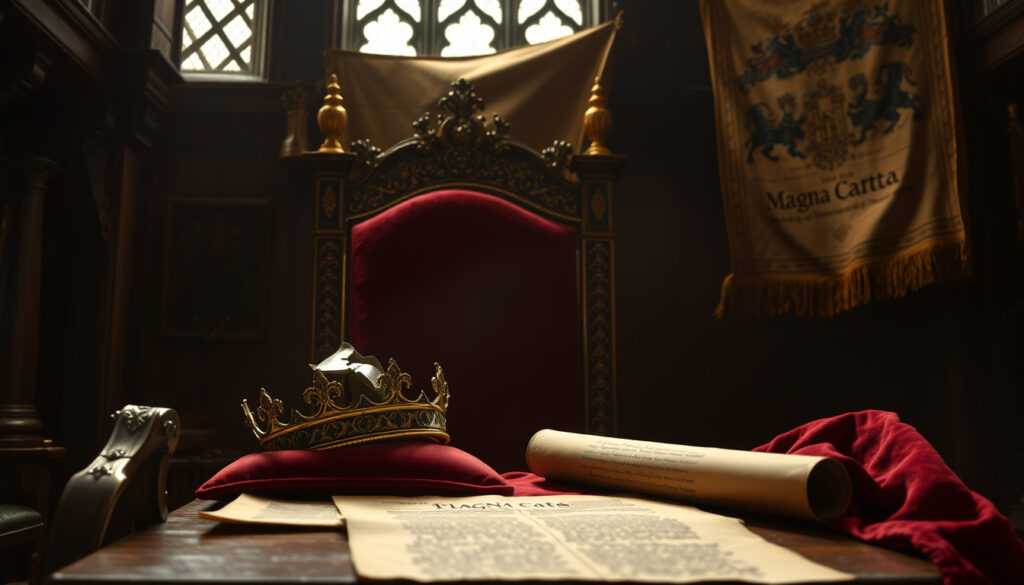
John Lackland: King John, Nickname, Unpopular Reign, and Legacy
Few medieval kings have left a reputation as sour as John Lackland’s. His reign, from 1199 to 1216, is remembered for lost territories, crushing taxes, and a baronial revolt that forced him to seal the Magna Carta — a document that, as the UK Parliament (the official legislative body) notes, was the first to state that the king was not above the law, and here’s what made him so unpopular, why his nickname stuck, and how his failures changed the course of English history.
Reign: 1199–1216 ·
Nickname Origin: Youngest son of Henry II; inherited no land in France ·
Magna Carta: Sealed in 1215 ·
Death: Dysentery, 18–19 October 1216 ·
Notable Descendant Claim: Donald Trump alleged descendant via John’s son Henry III
Quick snapshot
- John lost the Duchy of Normandy in 1204 (Encyclopaedia Britannica (reference publisher))
- He sealed Magna Carta on 15 June 1215 (The National Archives (UK government archive))
- He died of dysentery on 18–19 October 1216 (World History Encyclopedia (historical encyclopedia))
- Exact cause of death (dysentery vs. other illness) — contemporary accounts vary
- Whether Donald Trump is a descendant — distant link debated by genealogists
- 1215: Magna Carta sealed at Runnymede — a constitutional first (UK Parliament)
- 1204: Loss of Normandy — turning point in John’s reign (Encyclopaedia Britannica)
- Magna Carta’s legacy: inspired constitutional documents worldwide (The National Archives)
- John’s son Henry III reissued the charter in 1225, cementing its principles (The National Archives)
Five facts about John Lackland, one pattern: the man who inherited little but lost a kingdom.
| Label | Value |
|---|---|
| Full Name | John Plantagenet |
| Born | 24 December 1166, Oxford |
| Died | 18–19 October 1216, Newark |
| Spouse | Isabella of Angoulême |
| Children | Henry III, Richard of Cornwall, Joan, Isabella, Eleanor |
What was John Lackland known for?
His reign and loss of French territories
John Lackland is best known for losing the Duchy of Normandy in 1204 to Philip II of France. This loss, recorded by Encyclopaedia Britannica (reference publisher), crippled England financially and triggered years of conflict. His attempts to regain the lands failed, culminating in a failed campaign in 1214 that made no lasting gains.
The implication: John’s military failures not only shrank the Angevin Empire but also pushed him to raise money through heavy taxation, which alienated his barons and set the stage for rebellion.
The sealing of Magna Carta
On 15 June 1215, John met rebellious barons at Runnymede and sealed the Magna Carta. According to The National Archives (UK government archive), the charter was dated in the seventeenth year of his reign and was a peace settlement. The UK Parliament notes that it was the first document to put into writing the principle that the king and his government were not above the law.
John bought temporary peace by signing away absolute power, but the barons distrusted him. Within months, civil war resumed.
Why this matters: Magna Carta became a foundation for constitutional law, reissued by John’s son Henry III in 1225, which became the definitive version.
Why is King John called John Lackland?
The origin of the nickname
The nickname “Lackland” (or “John Sans Terre” in French) originated because John, as the youngest son of Henry II, inherited no land in France. This is confirmed by World History Encyclopedia (historical encyclopedia). The name was used from childhood, contrasting with his older brothers who received substantial territories.
The pattern: John’s lack of inheritance drove his lifelong ambition to acquire land, which led to conflict with his brother Richard I and later with France.
Comparison with his older brothers
Henry the Young King received England, Normandy, and Anjou; Richard I got Aquitaine; Geoffrey got Brittany. John got nothing. This disparity fueled his later attempts to carve out a kingdom, often through rebellion.
Why was King John so unpopular?
Taxation and conflicts with barons
John raised taxes without consent, imposed heavy scutage fees, and exploited feudal dues. According to BBC News (UK public broadcaster), the rebel barons were motivated by his arbitrary rule and high taxes. By 1215, heavy taxation and aggressive assertion of feudal privileges helped spark civil war.
The catch: John’s need for cash to fund his French wars made him extort his barons, who eventually turned on him.
Loss of Normandy and other territories
The loss of Normandy in 1204 was a humiliating blow. It not only reduced John’s prestige but also cut off income from those lands, leading to more domestic taxation. The World History Encyclopedia notes that this loss crippled England financially and helped trigger baronial rebellion.
John’s failed campaign in 1214 to recover his lands sealed his fate: the barons saw him as weak and tyrannical, and they took control of London in May 1215, forcing him to negotiate.
The pattern: John’s financial desperation alienated his barons and led to civil war.
Was John Lackland a bad king?
Historical assessment of his reign
Chronicler Matthew Paris, writing in the 13th century, called John a tyrant. Modern historians acknowledge his administrative competence — he was a capable administrator of the royal treasury and justice system — but his personal failings, such as his cruelty, suspicion, and greed, made him deeply unpopular. The World History Encyclopedia describes him as “one of England’s worst kings because of his character and failures.”
The implication: John’s reign is a case study in how personal flaws can undermine institutional competence.
Comparisons to other medieval kings
Compared to Richard I, who was absent but admired, John was present and hated. Compared to Henry III, who reissued Magna Carta, John’s legacy is far darker. The baronial revolt of 1215 was a direct result of his misrule, and the Magna Carta was a settlement forced on him, not a voluntary reform.
The trade-off: John’s failure gave birth to a constitutional principle, but it cost him his throne and his reputation.
Upsides
- Administrative reforms: improved royal record-keeping and justice system
- Magna Carta, though forced, established legal limits on royal power
- His son Henry III reissued the charter, solidifying its legacy
Downsides
- Lost Normandy and most of the Angevin Empire
- Heavy taxation without consent alienated barons and commoners
- Excommunicated by Pope Innocent III in 1209
- Civil war and baronial revolt in 1215–1216
Is Donald Trump related to John Lackland?
Genealogical claims and evidence
Some genealogists have traced a possible link between Donald Trump and John Lackland via John’s son Henry III. The connection is distant and not universally accepted. The claim appears in popular media but lacks robust documentation from primary sources. The World History Encyclopedia notes that many people claim descent from medieval kings, but such links are often speculative.
The catch: Even if true, the link would be so remote (over 800 years) that it carries no genetic or legal significance.
Other notable descendant claims
John Lackland’s descendants through Henry III and Edward I include many British monarchs and, by extension, numerous European royals. The claim about Trump is one of many that surface in genealogical databases, but it remains in the “unclear” category.
Why this matters: The fascination with presidential ancestry reflects a broader interest in connecting modern figures to historical events, but it should not overshadow John’s actual legacy.
Timeline
- – John born to Henry II and Eleanor of Aquitaine (World History Encyclopedia)
- – Acts as king while Richard I crusades
- – Crowned king after Richard’s death
- – Loss of Normandy to Philip II (Encyclopaedia Britannica)
- – Magna Carta sealed at Runnymede (The National Archives)
- – John dies of dysentery
The timeline shows the rapid decline of John’s reign.
What’s clear and what’s not
- Confirmed: John lost the Duchy of Normandy (Encyclopaedia Britannica); he sealed Magna Carta (The National Archives); he died of dysentery (World History Encyclopedia); his nickname “Lackland” originated from lack of inheritance (World History Encyclopedia).
- Unclear: Exact cause of death (dysentery vs. other illness); whether Donald Trump is a descendant — distant link debated.
The pattern: John’s confirmed failures are well-documented, but uncertainties remain.
Quotes from the period
“The barons are traitors.”
King John, recorded statement during baronial revolt (via World History Encyclopedia)
“John was a tyrant.”
Matthew Paris, 13th-century chronicler (via World History Encyclopedia)
John Lackland’s reign was a disaster for England in the short term, but it produced a constitutional turning point. For modern readers, the lesson is clear: unchecked power, even in a medieval kingdom, does not last. For the barons of 1215, the choice was between tyranny and reform — they chose Magna Carta, and that choice still echoes.
en.wikipedia.org, history.com, archives.gov, history.com, britannica.com, britroyals.com
Frequently asked questions
Who was John Lackland’s father?
Henry II of England, the first Plantagenet king.
What territories did John Lackland lose?
He lost Normandy, Anjou, Maine, and parts of Poitou to Philip II of France in 1204.
How did John Lackland die?
He died of dysentery on 18–19 October 1216 at Newark, according to historical accounts.
Was John Lackland excommunicated?
Yes, he was excommunicated by Pope Innocent III in 1209 over the appointment of the Archbishop of Canterbury. He was absolved in 1213.
What is the Magna Carta?
It is a charter sealed in 1215 that limited royal power and established the principle that the king is subject to the law.
How old was John Lackland when he became king?
He was 32 years old when he was crowned in 1199.
Who succeeded John Lackland?
His son Henry III, who was nine years old at the time of John’s death.
What is John Lackland’s family tree?
John was the son of Henry II and Eleanor of Aquitaine. He married Isabella of Angoulême and had five legitimate children: Henry III, Richard of Cornwall, Joan, Isabella, and Eleanor.
These FAQs address common questions about John Lackland’s life and legacy.
More related posts
 Birria Tacos Recipe – Authentic Beef with Consomé
 Bangalow Palm Guide: Growth, Care, Roots, and Common Questions
 Anytime Fitness Membership – Costs, Benefits and How to Join
 James Dean Death: Last Words, Cause, Car Crash & Legacy
 Cole Sprouse: Biography, Sobriety, Net Worth & More
 Alisha Lehmann: Age, Height, Partner, Salary & Instagram
 Jason Taumalolo: Contract, Height, Age & Career Facts
 ZAR to AUD Exchange Rate: Live Rates from Xe & Wise