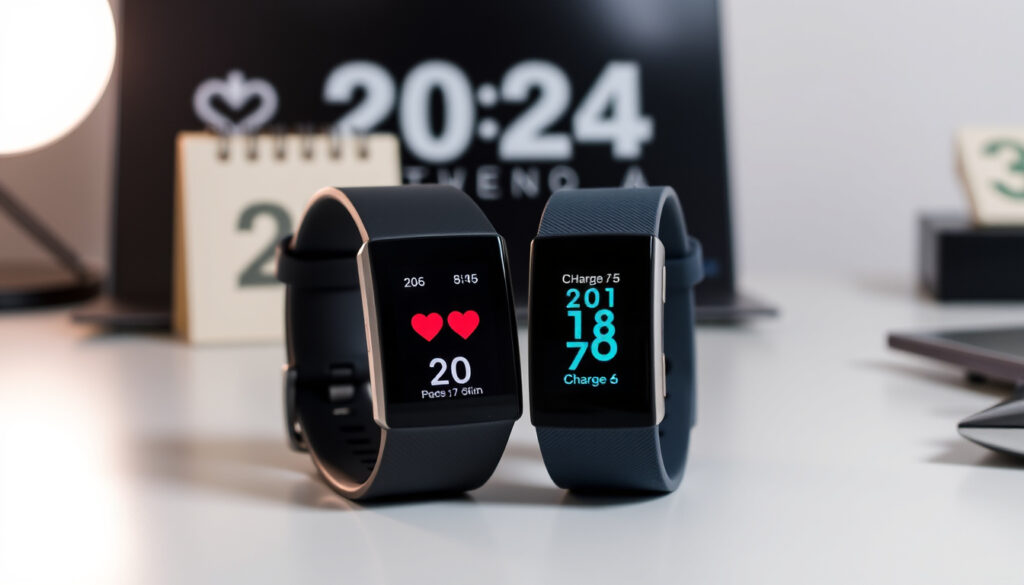
Fitbit Charge 5 Review: Still Good in 2024? Vs Charge 6
If you’ve been wearing a Fitbit Charge 5 for a few years, you might have noticed the numbers on screen don’t always match what you feel during a tough spin class. That’s not just you—it’s the sensor catching up with you. With the Charge 6 now on shelves, and reviews consistently highlighting a major heart-rate accuracy leap, buyers and upgraders alike face a sharper decision than they did back in 2021. This guide cuts through the specs to help you decide whether the Charge 5 still holds up or whether the grass is genuinely greener with its successor.
Battery Life: Up to 7 days ·
Water Resistance: Up to 50m ·
iOS Compatibility: 15 or higher ·
Android Compatibility: OS 9.0 or higher ·
Heart Rate Tracking: 24/7 with PurePulse
Quick snapshot
- 7-day battery life (Tom’s Guide)
- 50m water resistance (Coolblue)
- PurePulse 24/7 heart rate (Android Central)
- Exact AFib detection method and sensitivity thresholds (Tom’s Guide)
- How Charge 6’s new features affect real-world battery life during continuous heart monitoring (Tom’s Guide)
- Charge 5 released in 2021; Charge 6 launched October 2023 (Tom’s Guide)
- Reviews highlighting 60% HR improvement surfaced late 2023 (Business Insider)
- Heart health accuracy now rivals Apple and Garmin (Business Insider)
- Upgrade value depends heavily on workout intensity and payment-feature needs (Business Insider)
| Spec | Fitbit Charge 5 | Fitbit Charge 6 |
|---|---|---|
| Battery Life | Up to 7 days | Up to 7 days |
| Water Resistance | 50m | 50m |
| Heart Rate | PurePulse 24/7 | PurePulse 24/7 (60% more accurate) |
| ECG Support | Yes, AFib assessment | Yes, AFib assessment |
| Sports Modes | 20+ | Over 40 |
| HR Broadcast | No | Yes (Peloton, NordicTrack, Zwift) |
| Payment | Fitbit Pay | Google Wallet |
| Music | No | YouTube Music (sub required) |
| Physical Button | No | Yes |
| Premium Trial | 6 months | 6 months |
| Starting Price | $99.99 | $159 |
Is the Fitbit Charge 5 still good?
Three years after its 2021 debut, the Fitbit Charge 5 remains a capable fitness tracker—and the numbers reflect that. Its PurePulse heart rate sensor tracks continuously around the clock, and the 50-meter water resistance handles swims without issue. Battery life still stretches to a full week, meaning you won’t be hunting for a charger every other day.
Key features recap
- 24/7 PurePulse heart rate monitoring with high/low heart rate notifications
- ECG app for on-wrist atrial fibrillation assessment (Android Central)
- Active Zone Minutes targeting 150 weekly minutes in heart rate zones
- SpO2, EDA stress sensing, HRV, skin temperature, and breathing rate tracking at night
- AMOLED color display with always-on mode
Current performance in 2024
For everyday activity tracking—steps, sleep, basic workouts—the Charge 5 holds its own. Reviewers at Business Insider still call it a solid choice for users who don’t need the fastest sync or GPS accuracy. The catch is that fitness-focused buyers increasingly compare these trackers against chest straps and smartwatch benchmarks—and there, the Charge 5’s age shows.
If your workouts stay moderate and you mainly want sleep and step data, the Charge 5 remains a legitimate buy at its current price. But if you’re chasing precision in HIIT or interval sessions, the gap between what you see and what your body actually does widens.
What’s the difference between the Fitbit Charge 5 and 6?
The headline difference is accuracy. Fitbit claims the Charge 6’s heart rate sensor is 60% more accurate than the Charge 5—a figure Tom’s Guide verified across multiple workout types. The Charge 6 borrows machine learning algorithms from the Google Pixel Watch to better handle arm-active sports where wrist-based sensors typically struggle.
Design and display
Both trackers share the same AMOLED color display and waterproof build, but the Charge 6 adds a physical side button—a small change that makes navigating menus significantly faster. Charge 5 users swipe-only interaction, so this upgrade feels like relief for anyone who found the touchscreen finicky mid-workout.
The table below breaks down how the two models differ on key design and hardware elements.
| Design Element | Charge 5 | Charge 6 |
|---|---|---|
| Display | AMOLED color, always-on | AMOLED color, always-on |
| Physical Button | No | Yes |
| Waterproof | Yes, 50m | Yes, 50m |
| Case Color Options | Black, Platinum, Rosewood | Black, Steel Blue, Sandstone |
The implication: the physical button alone won’t justify the price jump for most users, but it removes one of the Charge 5’s most frequent friction points during exercise.
Health sensors
On paper, the sensor suites look identical: HRM, SpO2, ECG, EDA, skin temperature, ambient light, accelerometer, vibration, and NFC all appear on both models. But firmware and processing differences matter. Android Central notes that both devices detect atrial fibrillation passively, send irregular heart rate notifications, and track HRV at night. The real edge lies in how cleanly the Charge 6 captures data during high-intensity intervals.
Identical sensors on paper can produce different data in practice—the algorithm processing that raw signals matters as much as the hardware itself.
Fitness tracking
Sports modes tell the story quickly. The Charge 6 offers over 40 modes versus roughly 20 on the Charge 5—a difference of 20 new workout types including HIIT, CrossFit, skiing, core workouts, and dancing. For gym-goers who mix routines, that expansion is concrete, not cosmetic. Bandletic testing found the Charge 6 heart rate accuracy close to the Polar H10 chest strap even during fast-twitch intervals, while the Charge 5 trailed noticeably.
Is it worth upgrading from Fitbit Charge 5 to 6?
The upgrade math depends on how you use your tracker. Woman&Home specifically recommends the Charge 6 for anyone prioritizing accurate heart rate data during workouts. At roughly $60 more, you’re paying for precision and ecosystem features, not a dramatically different look.
Upgrade pros
- 60% heart rate accuracy improvement validated across multiple reviews
- Heart rate broadcasting to Peloton, NordicTrack, Tonal, Zwift, iFit—none available on Charge 5
- 20 additional workout modes for diverse training routines
- Physical button eliminates touchscreen frustration mid-exercise
- Faster, more reliable syncing with connected apps
- Google Wallet and YouTube Music add everyday convenience
What this means: for athletes and fitness enthusiasts who rely on heart rate data during structured workouts, the Charge 6’s accuracy gains directly translate into better training decisions.
When to stick with Charge 5
- Battery life matches the Charge 6 at up to 7 days—no endurance trade-off
- Core features—ECG, AFib detection, sleep stages, Active Zone Minutes—identical
- Fitbit Pay still works for contactless purchases in supported regions
- If you’re on a tight budget and your workouts stay moderate
What this means: for casual users whose training stays within moderate intensity, the Charge 5 delivers nearly everything the Charge 6 offers—at a significantly lower price.
For the cardiologist or personal trainer who needs reliable heart rate during sessions, the Charge 6 is worth the jump. For everyone else still doing casual runs and yoga, the Charge 5 won’t let you down—provided you manage expectations around accuracy during peak effort.
Does a Fitbit measure atrial fibrillation?
Both the Charge 5 and Charge 6 include ECG sensors capable of assessing heart rhythm for atrial fibrillation on the wrist. Android Central confirms passive AFib detection on both models—this isn’t a Charge 6 exclusive feature. You can run an ECG reading on demand and receive notifications if an irregular rhythm is detected while you sleep.
AFib detection capabilities
The “30-second rule” in atrial fibrillation refers to how long an irregular rhythm must persist before a Fitbit flags it. Both trackers monitor continuously rather than waiting for a manual ECG tap, which means they catch episodic irregularity even if you’re not thinking about your heart. The distinction is important: Fitbit provides screening data, not a clinical diagnosis. Any reading that concerns you should go to a physician.
30-second rule explanation
Medically, AFib episodes lasting under 30 seconds often resolve on their own and may not require intervention. Fitbit’s detection system looks for sustained patterns rather than momentary spikes—which is why the algorithm matters as much as the sensor. Business Insider notes that the Charge 6’s improved processing may make its AFib flagging more consistent during high-heart-rate workouts, though both devices share the same underlying sensor technology.
A fitness tracker is not a substitute for medical evaluation. If you have a history of heart rhythm issues, discuss Fitbit’s AFib data with your cardiologist before relying on it as a monitoring tool. The device screens; your doctor diagnoses.
Do cardiologists recommend Fitbit?
Cardiologists and fitness professionals increasingly acknowledge wrist-based heart rate monitoring as a useful screening layer—not a replacement for clinical tools. Business Insider notes that the Charge 6 rivals Apple and Garmin for accuracy in heart rate, sleep, and step tracking, which raises its profile among practitioners who want data their patients can actually act on.
Heart health tracking validation
The 24/7 heart rate monitoring, HRV tracking, and nighttime breathing rate data give physicians a longitudinal view that a single clinic visit can’t provide. For patients with known AFib risk factors—age, hypertension, family history—having a device that logs every irregular event for review has genuine clinical value. The key caveat remains data interpretation: a cardiologist reading your Fitbit export sees patterns, not diagnoses.
Smartwatch for heart issues
If you have existing heart conditions, the question isn’t whether to wear a tracker—it’s which one gives your doctor the cleanest data. For that use case, the Charge 6’s improved accuracy during workouts matters: erratic readings from the Charge 5 during intense intervals could create artifacts that confuse algorithmic AFib detection. Better signal quality means fewer false flags and more trustworthy logs to share with your care team. For those seeking a new device, consider checking out this review of the Realme C67 at $Đánh giá Realme C67.
For anyone with heart health concerns, Fitbit is a reasonable starting point—but the conversation with your cardiologist should come first. The Charge 6’s accuracy edge makes it the stronger choice if your physician endorses continuous monitoring, while the Charge 5 still provides meaningful baseline data for lower-risk users.
Upsides
- 7-day battery life unchanged from Charge 5
- ECG and AFib detection available on both models
- Charge 5 priced lower, still receives Fitbit updates
- Same waterproof depth and sensor suite as Charge 6
- 6-month Fitbit Premium trial included
Downsides
- Heart rate accuracy trails Charge 6 by 60% during intense workouts
- No HR broadcasting to gym equipment or apps
- Fewer sports modes limits workout variety tracking
- No physical button makes navigation slower
- No Google Wallet or YouTube Music integration
- Slower app syncing compared to Charge 6
Fitbit Charge 5 vs Charge 6: Specs compared
Eight key areas where these trackers diverge paint a clear picture for anyone deciding between them.
| Category | Fitbit Charge 5 | Fitbit Charge 6 |
|---|---|---|
| Heart Rate Sensor | PurePulse (gen 2) | PurePulse (gen 3, 60% more accurate) |
| ECG | Yes | Yes |
| AFib Detection | Passive monitoring | Passive monitoring (improved processing) |
| Sports Modes | 20+ | 40+ |
| HR Broadcasting | No | Yes (Bluetooth 5.0) |
| Payment | Fitbit Pay | Google Wallet |
| Music Control | No | YouTube Music |
| Navigation | Touchscreen only | Physical button + touchscreen |
| GPS Accuracy | Standard | Improved (lab-tested) |
| Sync Speed | Standard | Faster and more reliable |
| Algorithm Source | Fitbit legacy | Google Pixel Watch ML models |
| Price (MSRP) | $99.99 | $159 |
The pattern: the Charge 6’s improvements concentrate in three areas—heart rate precision, ecosystem connectivity, and navigation speed—with everything else remaining functionally identical to the Charge 5.
“Fitbit also said they made the heart rate sensor 60% more accurate on the Charge 6, saying it is better than any heart rate sensor on any of its previous fitness trackers.”
— Fitbit (Tom’s Guide product review)
“The Charge 6 is impressively accurate in measuring heart rate, sleep stages, and step counts, rivaling more expensive wearables from Apple and Garmin.”
— Business Insider (Best Fitbit review)
“In fact, this model has the most accurate heart rate tracking across Fitbit’s lineup, especially during fast-paced interval training.”
— Business Insider (Best Fitbit review)
For buyers weighing the Charge 5 against its successor, the decision framework is straightforward: if precision during workouts and ecosystem integration matter, the Charge 6 justifies the premium. If your needs center on daily activity tracking, sleep monitoring, and casual fitness with a longer battery window between charges, the Charge 5 remains a sensible purchase at a lower price point. Cardiologists reviewing patient data will appreciate the Charge 6’s cleaner signal during high-intensity sessions, while routine users with no history of heart rhythm concerns will find everything they need in either device.
How old is Fitbit Charge 5?
The Fitbit Charge 5 launched in 2021, making it roughly three years old as of 2024. Despite its age, Fitbit continues to release firmware updates and the device still receives Fitbit Premium features.
Should I get a smartwatch if I have heart issues?
A smartwatch or fitness tracker with heart monitoring capabilities can help track patterns over time and flag irregularities for your cardiologist to review. However, it is not a medical device—discuss any heart health concerns with your physician and use the tracker as a supplementary monitoring tool rather than a diagnostic replacement.
What is the best Fitbit to buy right now?
For most buyers, the Fitbit Charge 6 offers the strongest feature set with its 60% accuracy improvement, HR broadcasting, and physical button. If budget is a primary concern, the Charge 5 remains capable for basic fitness and sleep tracking. As of 2024-2026, the Charge 6 holds the top recommendation from multiple review outlets for heart health and workout precision.
What is the 30 second rule in atrial fibrillation?
The 30-second rule refers to a clinical threshold: AFib episodes lasting under 30 seconds often do not require medical intervention and may resolve naturally. Fitbit monitors continuously and flags sustained irregular patterns rather than momentary spikes, which aligns with how medical professionals evaluate arrhythmia severity.
Is the Fitbit Charge 5 Special Edition worth it?
The Fitbit Charge 5 Special Edition typically bundled additional straps or a screen protector with the device. Unless those accessories hold specific value for you, the standard Charge 5 at its lower price point delivers identical tracking performance. The “Special Edition” branding rarely indicates hardware or sensor differences.
What is Fitbit Charge 5 price?
The Fitbit Charge 5 launched at $139.95 and has since dropped to approximately $99.99 as of 2024-2025, making it one of the more affordable options in Fitbit’s lineup. Prices on Amazon and other retailers frequently fluctuate, so checking current listings for the best deal is advisable.
Where to buy Fitbit Charge 5 on Amazon?
The Fitbit Charge 5 is available directly from Amazon, Best Buy, Target, and Fitbit’s official store. Third-party sellers on Amazon also list the device—verify seller ratings and confirm the product is new rather than renewed before purchasing.
Related reading: Anytime Fitness membership costs · What does skin cancer look like
bandletic.com, powermax.com, youtube.com, prelaunch.com, youtube.com
While the Charge 5 remains solid, upgrading to Charge 6 lets you customize with a Charge 6 armband guide for better comfort across workouts and daily use.
More related posts
 David Stratton Obituary: Illness, Death and Legacy
 Retravision Near Me: Stores, Hours, Deals & Appliances
 Warren Tredrea: AFL Career, Legal Battle and Board Fallout
 Jarome Luai: Salary, Kids, Panthers Exit, and Parramatta Move
 Elaine Hendrix: Biography, Career, Relationships, and More
 Blood Pressure Levels: Normal, High, and Danger Zones
 Slash Guns N’ Roses: Biography, Exit, Health, and Reunion
 Mon Mothma: Actress, Andor, Rogue One, and Death